
Two documents
A home and a building get separate written scopes, even under one customer name. Each lists its own tasks, frequency, and exclusions, so a question about one has an answer that does not involve the other.
Serving Coon Rapids, Minnesota & surrounding areas
Mon–Fri 8am–6pm Sat 9am–2pm
Plenty of households and businesses want one cleaning company rather than two. That works when each agreement is written on its own terms, and it stops working the moment a crew carries one checklist into both.
Two kinds of work
Scoped apart, never merged
Billing
Separate per agreement
Contact
One office, one number
Some callers want a house cleaned every other week. Others want a building covered on a nightly rota. A fair number want both, because they run a business and would rather not manage two vendors. All three are reasonable, and they need different paperwork.
The mistake is treating one as a version of the other. A home scope turns on rooms, pets, and which surfaces a family cares about. A facility scope turns on traffic, restrooms, floor types, and access after hours. Written together, they produce a checklist that half fits each.
Coon Rapids Cleaning works out of an office on Northdale Blvd NW, and reaching Brooklyn Park means a crew that travels out rather than one tied to a single street. Scheduling is arranged around that, which suits recurring work in both categories.
Because a household and a facility measure clean differently, each agreement names its own rooms, its own frequencies, and its own list of what is deliberately left alone.
Where somebody holds both agreements, they still get one office and one number. What they do not get is a blended invoice or a merged checklist, because those are what make it impossible to tell whether either property is being cleaned to the standard that was agreed.
Minnesota weather lands on both at once. Salt and melt water come through a front door and a commercial entrance alike, so matting and entry floors move up the frequency list in winter on each agreement, independently of the other.

Covering a home and a business through one company works only while the differences stay visible: separate documents, separate checklists, honest arrival windows, familiar crews, and changes recorded properly.
A home and a building get separate written scopes, even under one customer name. Each lists its own tasks, frequency, and exclusions, so a question about one has an answer that does not involve the other.
The crew working a house follows a household checklist, and the crew in a facility follows a facility one. Neither is a trimmed version of the other, because the surfaces and priorities genuinely differ.
A crew reaching the city comes from elsewhere, so arrival windows are set with that in mind and are wide enough to be real. A time nobody can keep is worse than an honest window.
Recurring work goes to the same people wherever possible, because a crew that knows a property needs less direction. A stand-in works from the written scope rather than a verbal briefing.
Adding a room, dropping a task, or shifting a frequency is recorded against the right agreement. An unwritten change is the thing that quietly turns a scope into guesswork.
A first booking happens once per property rather than once per customer, and it runs from a short conversation through a walkthrough to a written agreement and a settled rhythm.
Request a CallbackTell us whether this is a home, a workplace, or both, roughly how big, and what you want handled. That decides which kind of walkthrough makes sense.
Someone comes out and goes through it with you, noting surfaces, access, and the things you want left alone. Both properties get this if you hold two agreements.
You get a scope naming tasks, frequency, products, and exclusions. Where there are two, you get two, and neither references the other for its detail.
Early visits usually adjust once real use shows itself. Frequencies and priorities get tuned, and the written scope is updated to match rather than drifting from it.
Size, frequency, and condition do most of it, and they work differently on each side. A house is priced on rooms, bathrooms, and how much detail work the family wants. A building is priced on area, restroom count, floor types, and how often a crew is on site.
Where one customer holds both agreements, each is quoted on its own terms rather than bundled into a single figure. Travel from Coon Rapids is accounted for in the schedule rather than charged as a separate line, and every quote follows a walkthrough rather than a phone estimate.
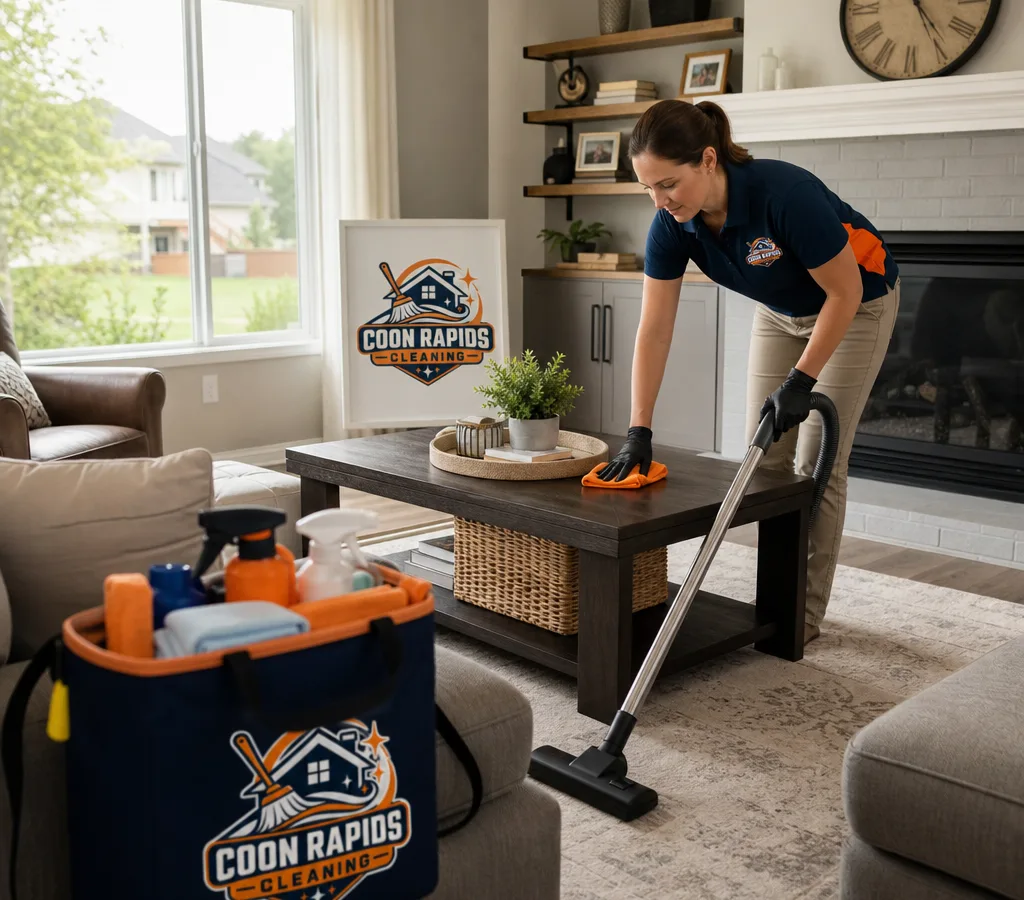
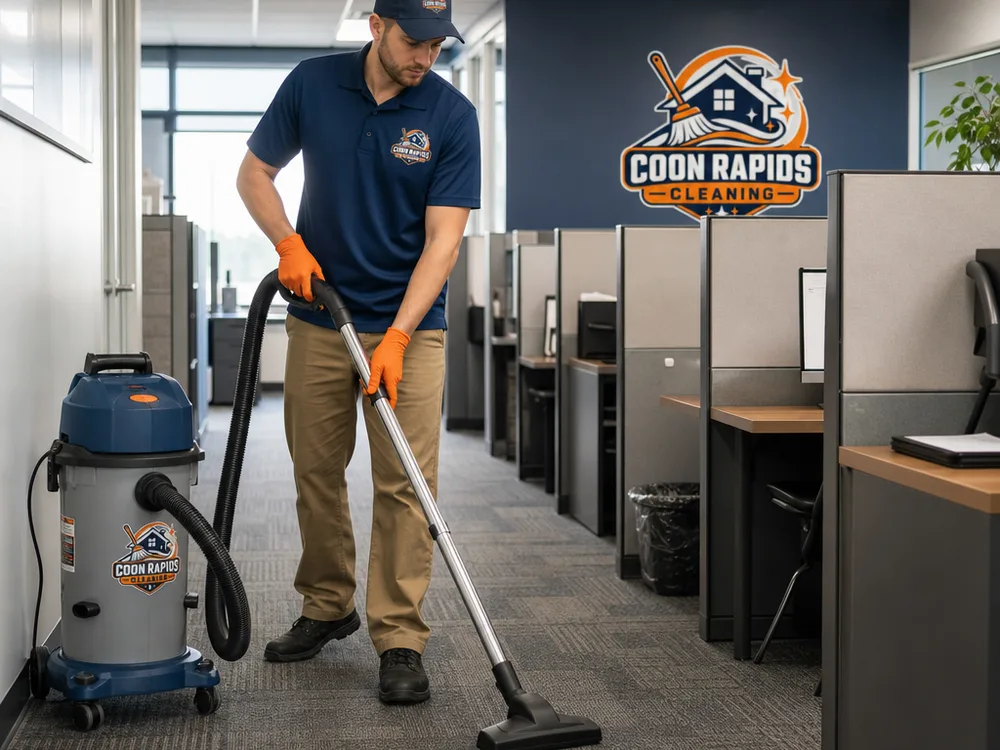
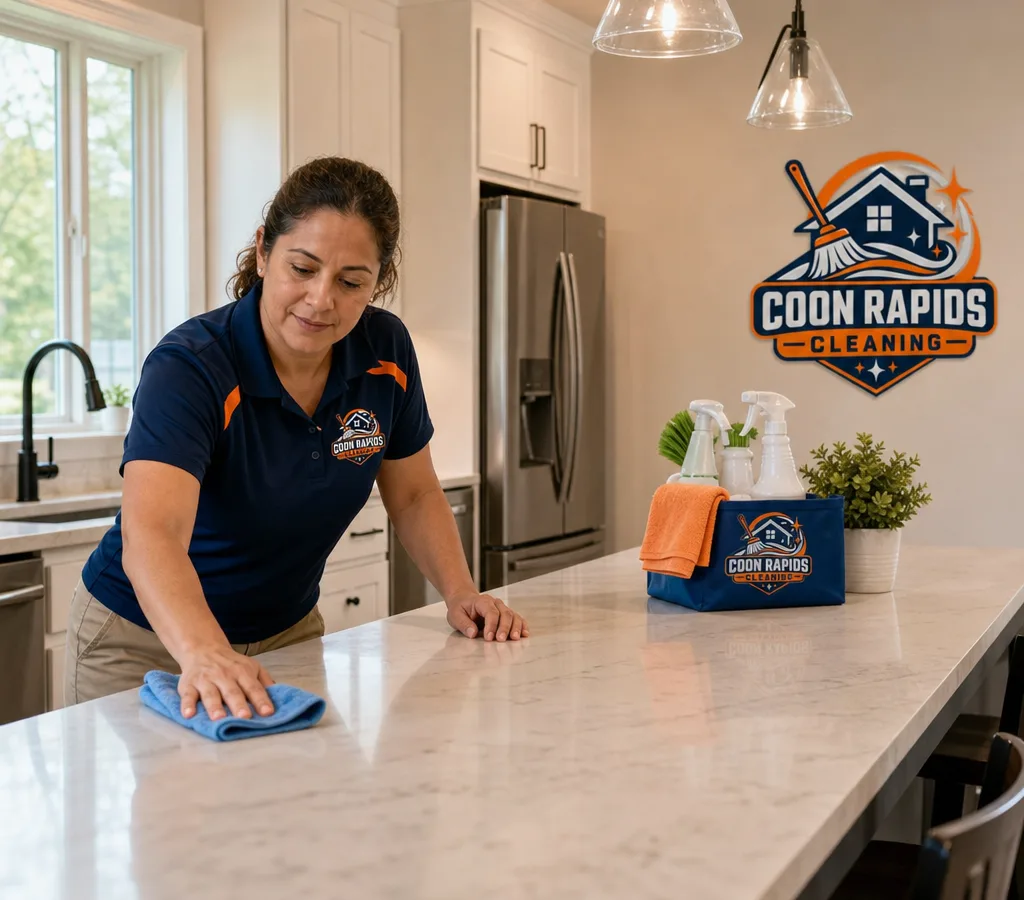
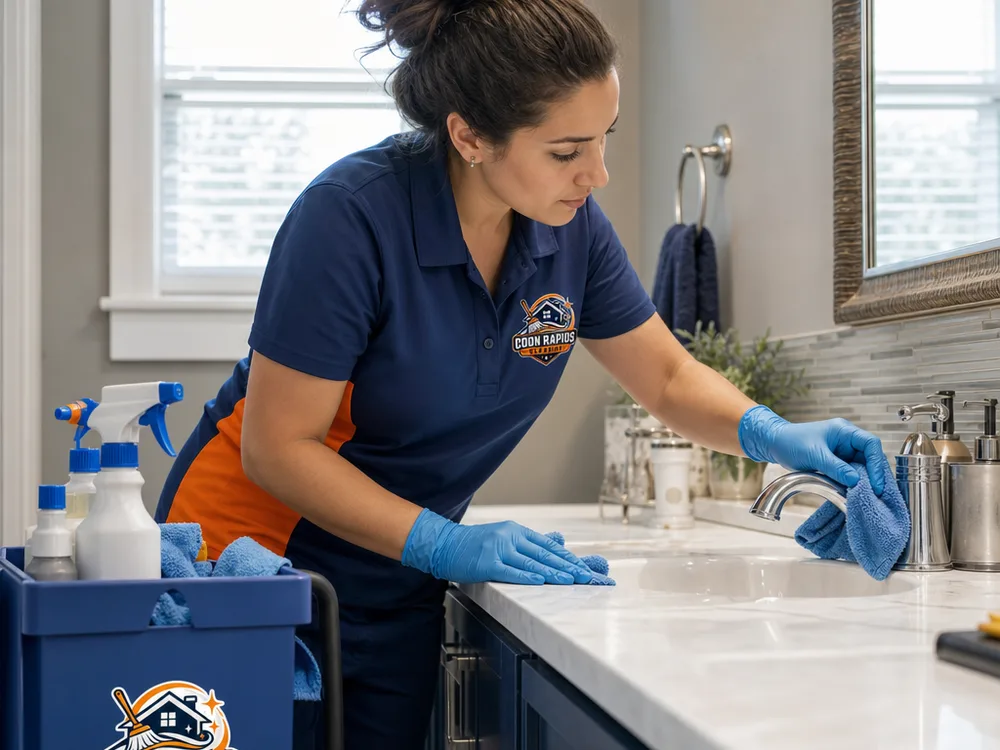
The work splits between household rooms and facility areas, cleaned to their own standards: kitchens, bathrooms, and living spaces on one side, entries, restrooms, and traffic lanes on the other.
Holding two agreements at once raises questions a single property never does, and most of them are about keeping the two straight.
Yes, and the way to make it work is two agreements rather than one. Each property gets its own walkthrough, its own written scope, and its own frequency. You deal with one office and one number, but nothing about the home scope is inferred from the business one or the other way round.
Yes. The crews are based in Coon Rapids and travel to the properties they cover, which is the normal arrangement rather than an exception. Recurring work is what makes that practical, so weekly, fortnightly, and nightly schedules are easier to commit to than occasional one-off visits.
That is the aim on any recurring agreement, because a crew that already knows a property works faster and needs less direction. When somebody is away, their cover works from the written scope rather than a verbal handover, so the priorities do not change with who turns up.
You get a window rather than a minute, and the window is wide enough to be honest about travel. A crew coming from another city cannot promise a doorstep time without eventually breaking it, and a promise that holds is worth more than one that sounds better.
That is available, and it is quoted the same way: a walkthrough, then a written scope naming the rooms and the hours booked. One-time work in a city we travel to is scheduled around the recurring commitments already in place, so there is usually more flexibility midweek.
Either side, decided per property. Businesses often prefer to stock their own consumables so the brands stay consistent in dispensers, and households more often leave it to us. Whatever you decide goes into that property's written scope rather than being settled verbally each visit.
Tell us whether you are asking about a home, a workplace, or both, and we will arrange the walkthrough that fits and put each scope in writing on its own terms.
Request a quote
Send the details and we will come back with a written scope and a price.