Grout and drains
Odor in a wet area lives in grout lines and drains. Grout gets scrubbed rather than mopped over, and drains get cleaned out, because mopping spreads a film and leaves the source in place.
Serving Coon Rapids, Minnesota & surrounding areas
Mon–Fri 8am–6pm Sat 9am–2pm
Gym odor is not an air problem, and spraying something pleasant over it only buys an hour. It comes from grout, drains, mats, and upholstery seams, which is where the cleaning has to happen.
Odor
Treated at the source
Equipment
Touchpoints every visit
Wet areas
Grout and drains
Odor in a gym has physical sources, and masking it is a short term trick that members see through. Sweat soaks into grout lines, into the rubber of mats and flooring, into the seams of upholstered benches and pads, and into shower and locker room drains, and it stays there until something removes it.
The second half of the job is touchpoints. Handles, grips, dumbbells, bench pads, cable attachments, and the console buttons on cardio equipment are handled by every member who comes through, and a wipe station by the door does not reach what builds up on them over a week.
Planning from our Northdale Blvd NW office in Coon Rapids lets a schedule sit around a facility's quiet hours instead of a fixed window. A gym open early and late leaves narrow gaps, and the work gets placed where it does not compete with a class or a morning rush.
A gym scope deals with the sources of odor first and the shared touchpoints second, then the locker rooms and studios where both problems concentrate.
Equipment maintenance stays with your staff or your service provider. We clean surfaces and touchpoints; we do not open consoles, adjust machines, or clean inside housings, and the scope says so. Anything a manufacturer requires a technician for belongs with that technician.
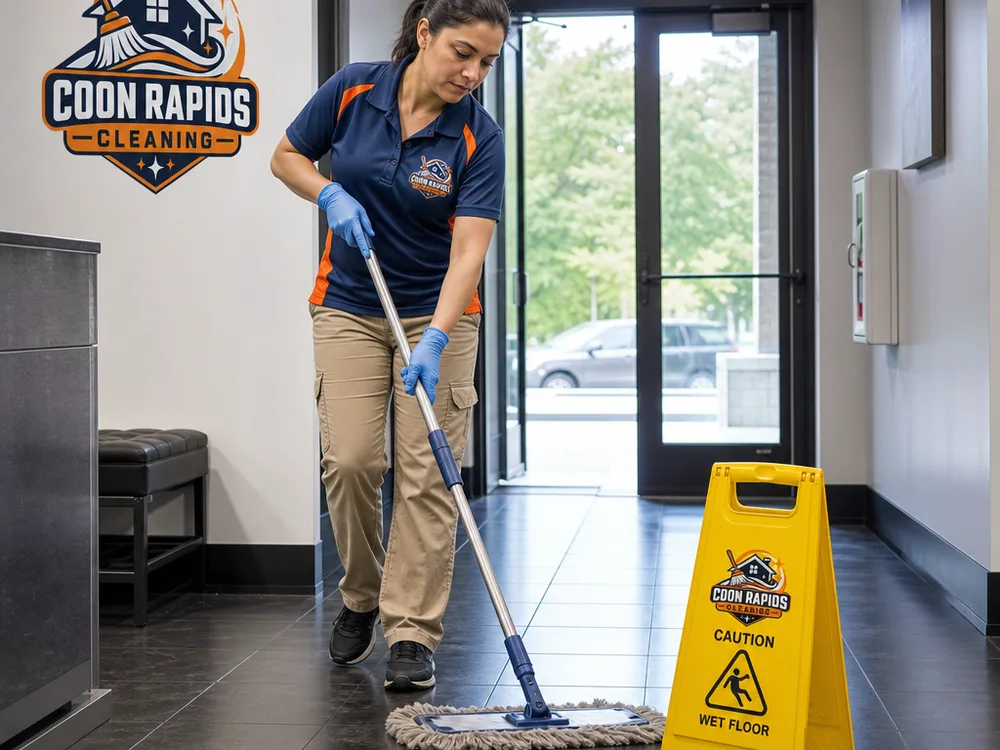
Minnesota winters change the floor work. Grit and water arrive from the parking lot and sit on rubber and mat flooring, which holds that abrasive material and grinds it in, so matting and the floors just inside the door move to a tighter frequency through the cold months.
Odor has physical sources and masking it fools nobody, so the work concentrates on wet areas, absorbent flooring, shared touchpoints, and the upholstery seams where sweat actually sits.
Odor in a wet area lives in grout lines and drains. Grout gets scrubbed rather than mopped over, and drains get cleaned out, because mopping spreads a film and leaves the source in place.
Rubber flooring and mats absorb sweat and need products suited to them, applied with enough contact time. The wrong chemistry degrades the surface, and too little water leaves it smelling the same.
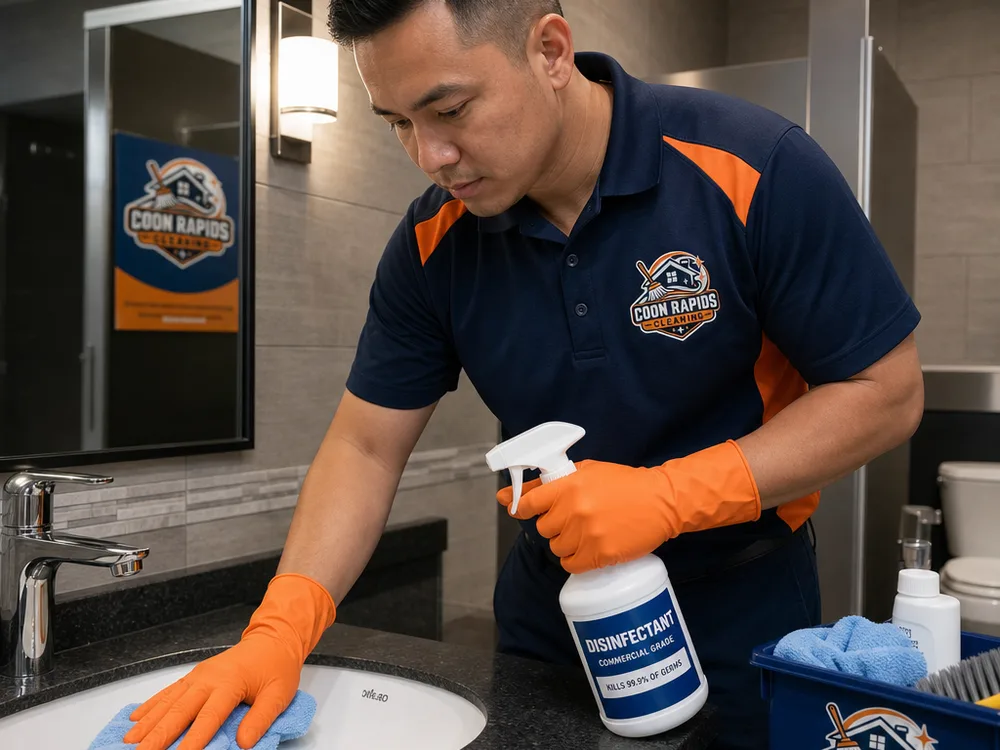
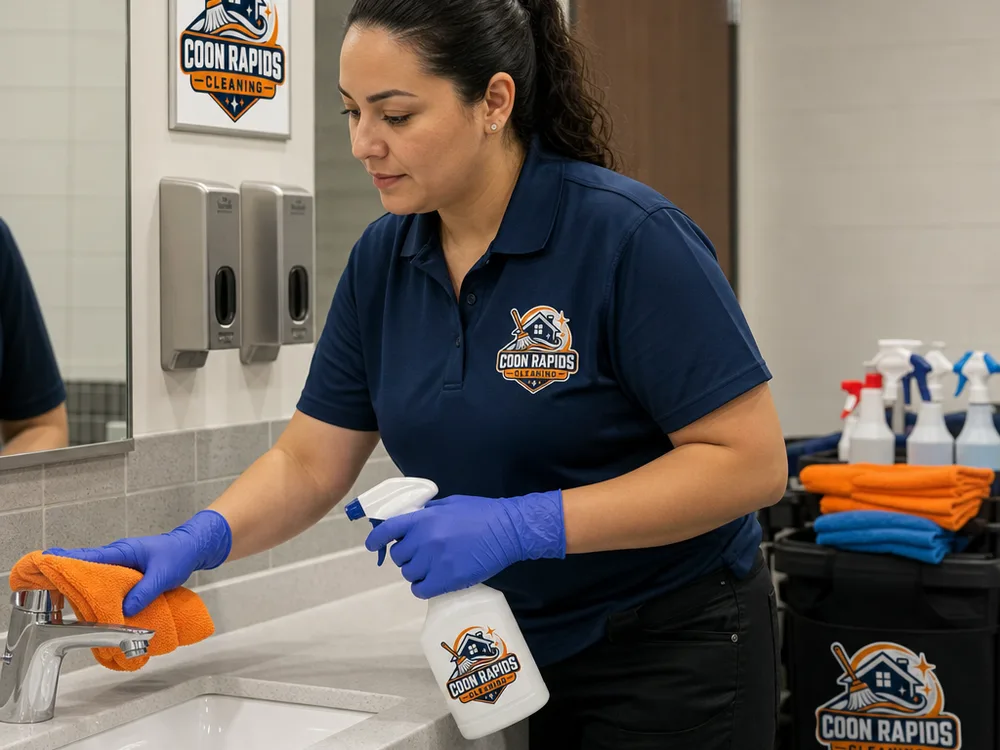
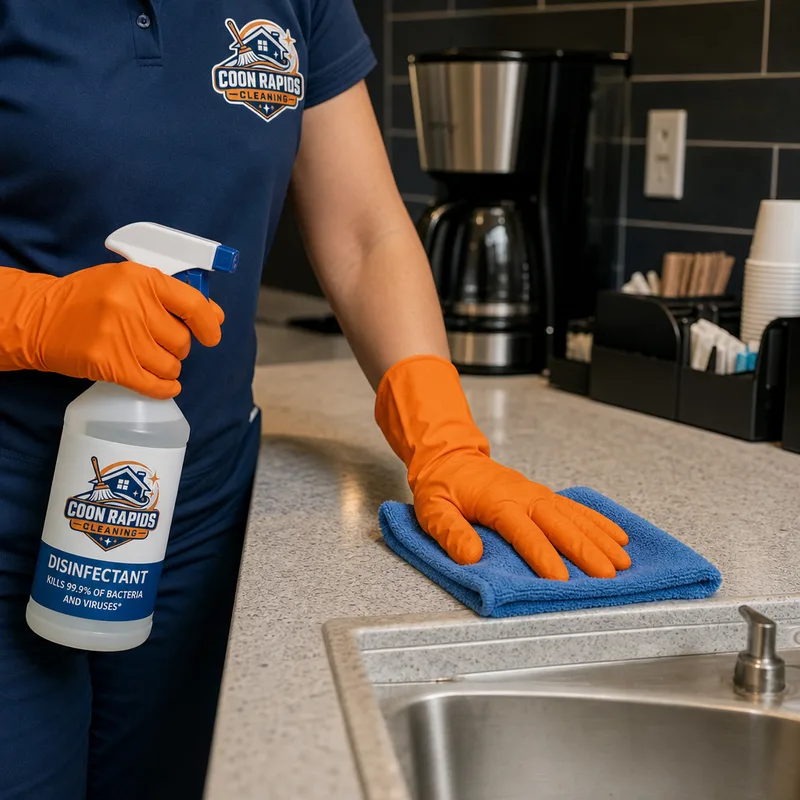
Grips, pads, consoles, and attachments are disinfected with the dwell time the product needs. A fast pass with a dry cloth moves soil around rather than removing anything.
Bench pads and upholstered equipment trap sweat in their seams, which is where odor persists after the surface looks clean. Those seams get worked rather than wiped across.
Nothing in the scope relies on fragrance to cover a problem. If an area still smells after cleaning, the answer is a frequency or a method change, not a stronger air product.
Early opening and late closing leave narrow gaps, so getting started means finding them, learning the surfaces, setting products that suit them, and going back to check the wet areas.
Request a CallbackA first visit covers the training floor, studios, locker rooms, showers, and reception, noting flooring and equipment types and what your staff covers through the day.
The schedule is built around your opening hours and class timetable, with the wet area work placed where it can be done properly and left to dry.
The products suited to your flooring and equipment surfaces are specified alongside the cycle each area runs on, and the maintenance staying with your technicians is named.
A follow up visit looks at the locker rooms and wet areas specifically, since those are where a frequency that looked adequate on paper usually needs adjusting.
Locker room and shower count drive this more than the size of the training floor. Wet areas take the most time and the most frequent attention, and a facility with two full locker rooms is a different job from a studio with a single restroom.
Equipment count, flooring type, opening hours, and frequency account for the rest. A gym open early and late leaves narrow windows, and a facility where odor has already set into grout or mats needs a reset before a routine schedule can keep ahead of it.
Gym work runs from the wet areas outward: showers, drains, and locker rooms first, then rubber flooring, mats, studio surfaces, and the equipment touchpoints every member handles.
After a crew leaves, a facility manager walks the locker room before anything else. That instinct is right, and it shapes the answers here.
Usually, by treating the sources instead of the air. Grout, drains, rubber flooring, mats, and upholstery seams hold sweat, and cleaning those removes the odor rather than covering it. On a facility where it has set in over years, the first visit is a reset and the routine holds it after.
Touchpoints get cleaned and disinfected with the contact time the product needs: grips, handles, bench pads, cable attachments, and console surfaces. We do not open housings, adjust machines, or do anything a manufacturer requires a technician for.
Ones suited to the surface, because the wrong chemistry degrades rubber and mat flooring over time. It also needs enough moisture and contact time to lift absorbed sweat, so the method is a balance between cleaning properly and protecting the floor.
In whatever gap your timetable leaves, which is often early morning, late evening, or between class blocks. Wet area work is placed where it can be done properly and left to dry, since a shower floor that is rushed is the one that smells by midweek.
More often than anything else in the building, and usually daily where a facility is busy. They are the areas members judge hardest and the ones where moisture and odor concentrate, so the frequency there is set first and the rest of the scope is built around it.
Either side can. Many facilities prefer to stock their own member facing supplies so the brands stay consistent, and we fill and maintain the stations. Should you prefer that we provide them, that goes in the written scope with the rest.
Walk the locker rooms and the training floor with us and tell us where the complaints come from. The sources and the touchpoints get scoped around your quiet hours.
Request a quote
Send the details and we will come back with a written scope and a price.