
Access in writing
Keys, codes, badge rules, alarm steps, and who to call when a door does not open are recorded before the first visit, so a crew change never turns into a night of missed cleaning.
Serving Coon Rapids, Minnesota & surrounding areas
Mon–Fri 8am–6pm Sat 9am–2pm
Your building gets cleaned on a schedule your team can plan around, by a crew that already knows the access rules. Recurring commercial service covers the floors, restrooms, and touchpoints every visitor sees.
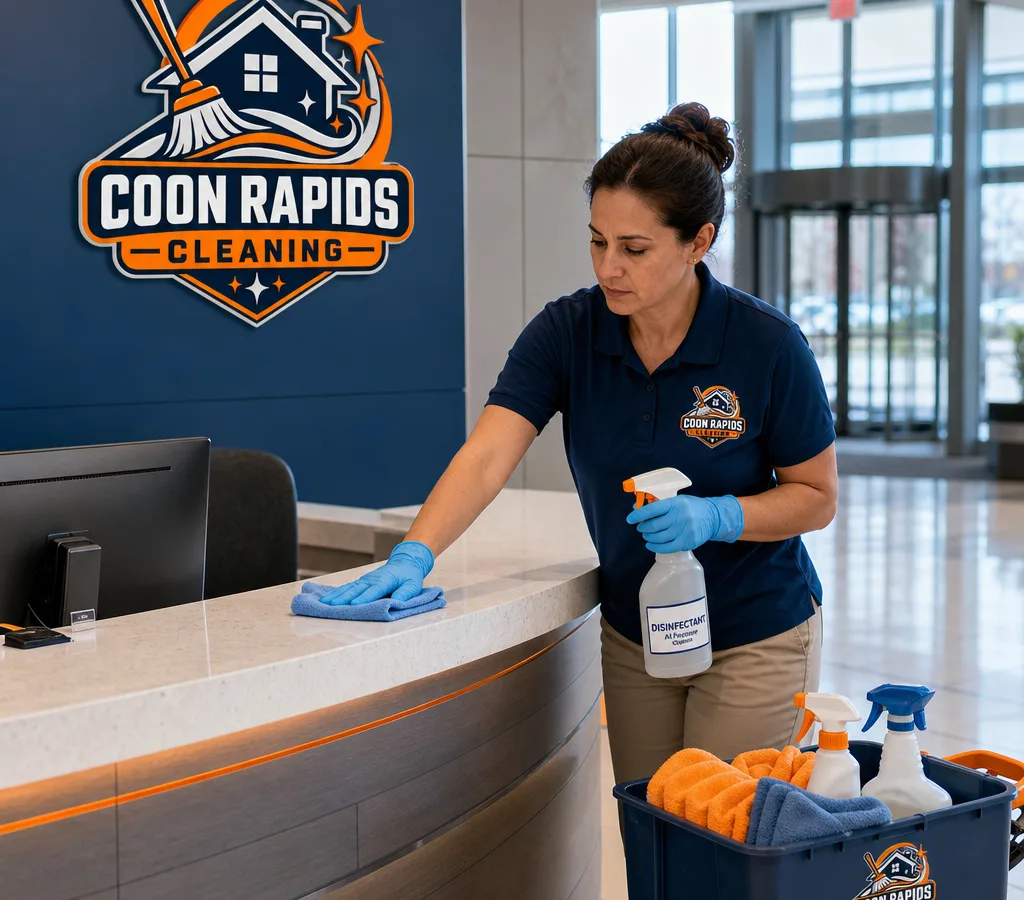
Access handled
Lockup and alarm steps in writing
Same plan weekly
A checklist the crew cleans against
One point of contact
Requests go to a person who answers
Businesses buy commercial cleaning for one reason: the building has to be presentable when it opens, every day, without anyone on staff managing it. Coon Rapids Cleaning builds a recurring scope for your facility, then cleans against it so the result does not depend on who happens to be holding the mop that night.
The work covers what customers and staff actually touch and see: entry glass and mats, restrooms and their stock, breakrooms, trash and liners, and the floors in your traffic lanes. Retail floors, service counters, studios, and multi-tenant common areas each get a scope written for the way that space is used.
We work out of 2147 Northdale Blvd NW, Suite 4 in Coon Rapids, so a schedule change or an added request is handled by people nearby rather than a call center in another state. That matters most when your access window is narrow and the crew has to be redirected in the same week.
Every scope is written for the building it serves, though most commercial cleaning programs in Coon Rapids are assembled out of the same working parts.
Scopes shift with the season here. Winter brings salt and sand through every entrance, so entry matting and floor attention move up the priority list until the lots are dry again, and the warmer months move it back toward dust, fingerprints, and glass.
Anything your building requires sits in the scope too: a sign-in procedure, a loading dock window, a tenant rule about running a vacuum late in the evening, or the key and alarm sequence a crew follows at lockup. Written down once, the visit stops being a conversation.
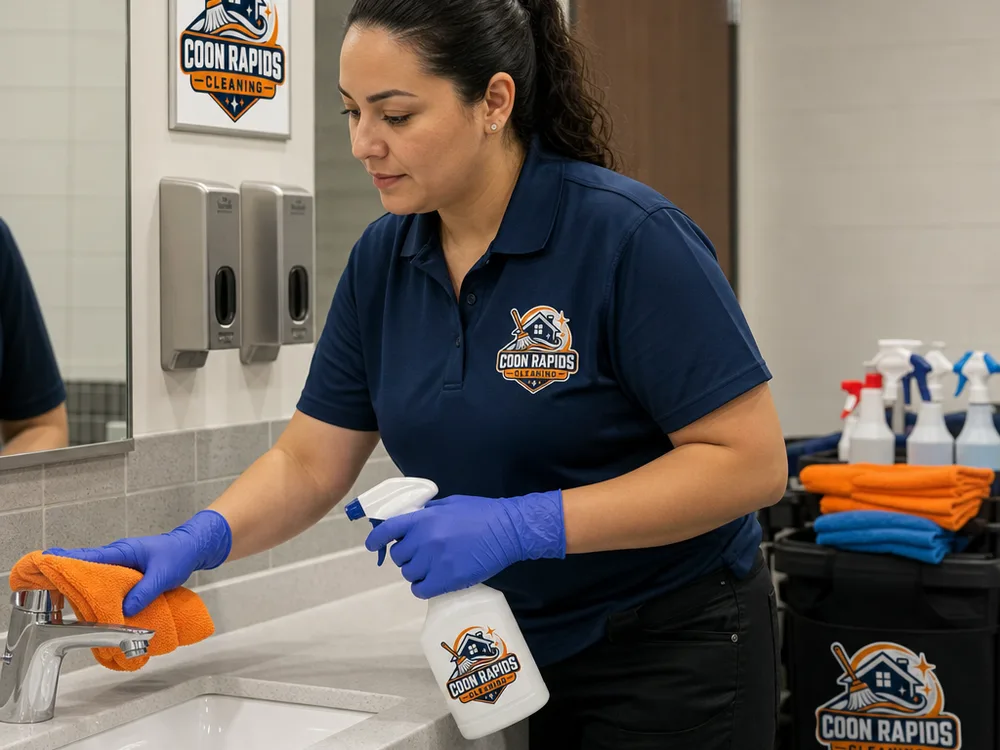
A cleaning contract is easy to sign and harder to keep steady. What decides that is unglamorous: how a crew gets in, who covers an absence, when the work happens, and how standards and requests are tracked.
Keys, codes, badge rules, alarm steps, and who to call when a door does not open are recorded before the first visit, so a crew change never turns into a night of missed cleaning.
Vacations and sick nights are expected rather than improvised. The scope and the checklist belong to the account, so a substitute cleans the same priorities in the same order.
Most commercial work happens after you close or before you open, around your alarm window and any shared-building rule about noise, so your staff never has to work around a vacuum.
Someone walks the building against the written scope rather than from memory, and what that walk turns up is corrected on the next visit instead of quietly accumulating.
An added conference room, an event cleanup, or a frequency change goes to one contact and comes back as an updated scope, so nothing rests on a verbal promise made to a crew.
Setting up a new building takes some work before the routine can look after itself, covering what the space needs, what gets agreed in writing, and how the schedule settles into a rhythm.
Request a CallbackWalking the building together, we note the floor surfaces, restroom fixtures, trash path, and access points, and ask what your own staff already handles so the scope does not double up.
The tasks, the frequency, and the exclusions go on paper, including the access sequence and anything your building or lease requires of a vendor working after hours.
Early visits run long wherever buildup has to be brought down to a baseline. That one-time reset is quoted on its own so the recurring price reflects maintenance, not catch-up.
The crew settles into the route, and we adjust frequency where reality disagrees with the plan: a lane that needs more vacuuming, a restroom that needs a second check.
Commercial cleaning is priced on the building rather than off a list. Size matters, but so does frequency: a space cleaned several nights a week holds its baseline and takes less time per visit than the same space cleaned twice a month and allowed to drift between visits.
Surface type, restroom and breakroom use, trash volume, access restrictions, and the condition we start from all move the number. We price after walking the building, so the quote is written against a scope you can hold us to and competing bids can be compared on the same tasks.
Recurring commercial work is mostly ordinary rooms kept to the same standard: restrooms, kitchens, carpet lanes, and the surfaces people touch on their way through a building.
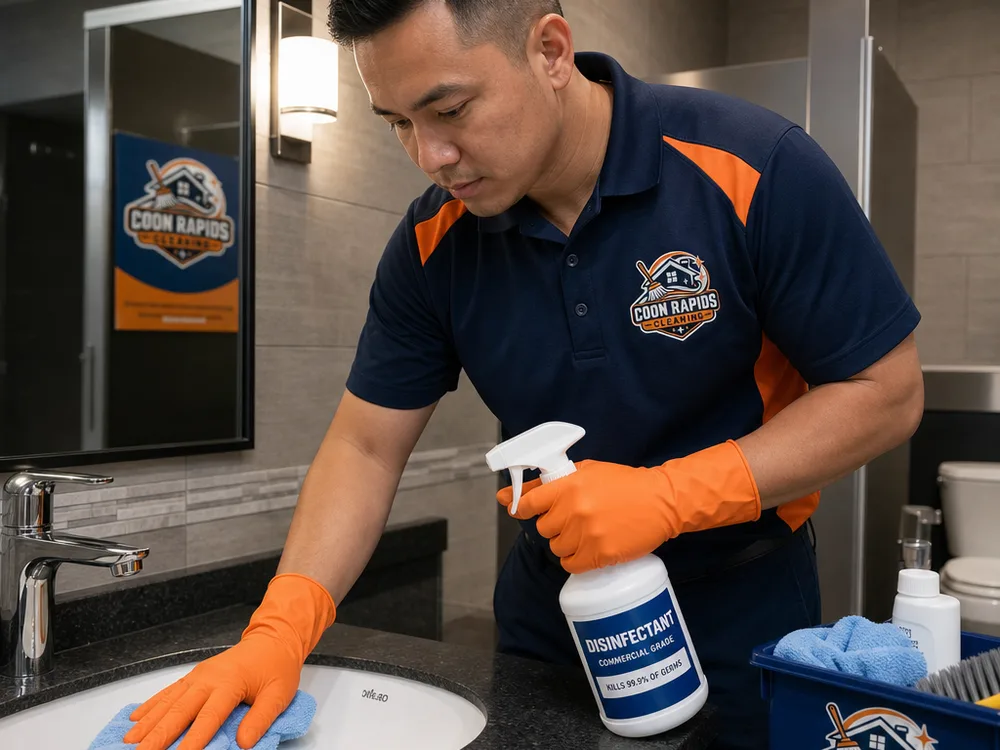
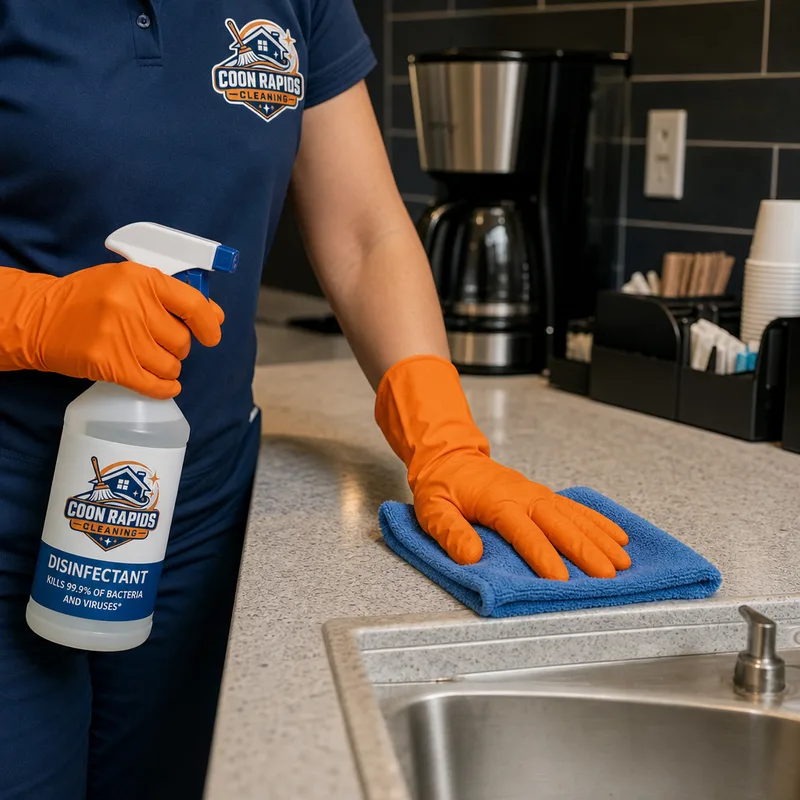
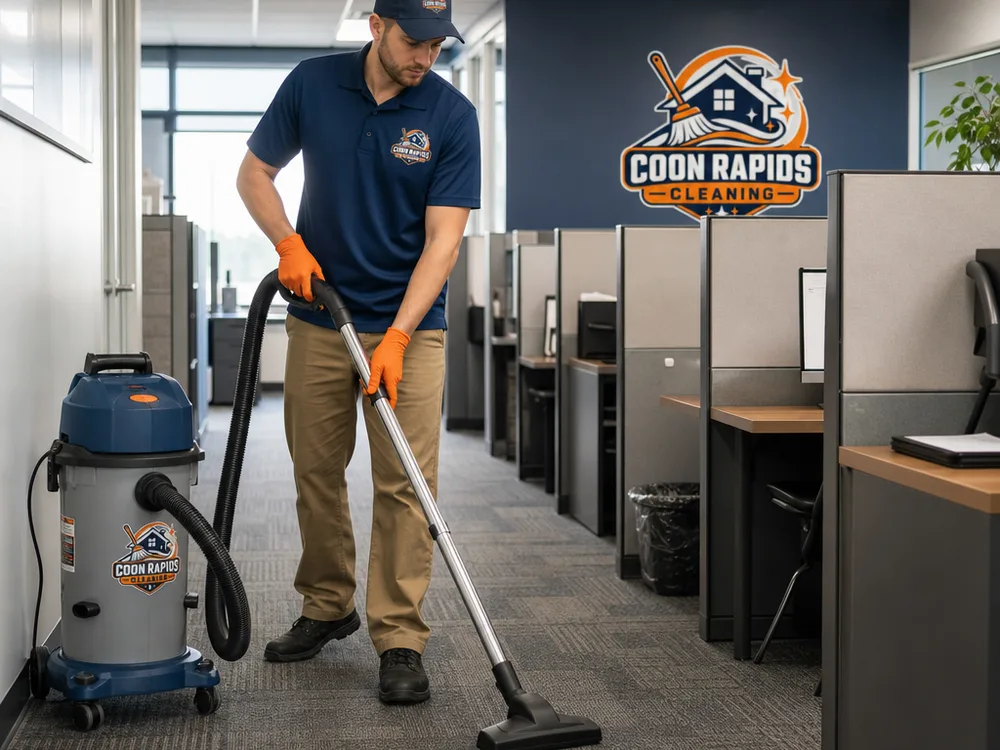
Facilities managers ask about hours, supplies, and what happens on a missed night before they sign anything. The answers here deal with the practical side of a recurring scope.
Yes, and most commercial accounts in Coon Rapids are cleaned after close or before open. We build the visit around your alarm window, your lockup sequence, and any building rule about when a vendor can run equipment. If a daytime presence is what you actually need, that can be scoped as scheduled daytime service instead.
Office cleaning covers janitorial work inside office suites, and that service has its own page. This one is broader: retail floors, service counters, studios, community buildings, and multi-tenant common areas, where the priorities are entry glass, restrooms, and floors taking public traffic rather than desks and conference rooms.
Yes. Frequency is the easiest part of a scope to adjust, and most accounts move at least once after their first full season. We rewrite the scope rather than handle it verbally, so the checklist, the schedule, and the price all change together instead of drifting apart over time.
Either side can. Many buildings prefer to buy their own consumables so the dispensers stay consistent, and our crews restock from your supply closet as part of the visit. If you would rather we carry those items, it goes in the scope and appears as a line in the quote.
Tell the contact on your account rather than the crew. A missed night is either made up or credited, and we look at why it happened: an access failure, a conflict inside the building, or staffing. Access problems cause most of them and are the easiest thing to fix permanently.
A written scope matters more than a long term. The scope is what keeps the work consistent when staff change on either side, and recurring service does cost less per visit than one-time cleaning, because the building never falls back to a condition that needs catching up.
Tell us the building, the hours you can give a crew, and what your team is tired of handling, and we will walk it and come back with a written scope and a price.
Request a quote
Send the details and we will come back with a written scope and a price.