
Surface identification
We confirm what the floor is and what is sitting on it, since vinyl, luxury vinyl plank, sealed concrete, and natural stone all look similar under a dull coating and none of them take the same treatment.
Serving Coon Rapids, Minnesota & surrounding areas
Mon–Fri 8am–6pm Sat 9am–2pm
A floor rarely wears out from use alone: it wears out once the finish is gone and traffic starts working on the material underneath. Scheduled floor care keeps that coating intact so the surface lasts.
Matched to the material
Method chosen by surface and sealer
Dry time planned
Scheduled around when you open
Finish, not just clean
Coating protected so wear slows
Floor care is a different trade from routine cleaning. Vinyl composition tile wants a finish maintained by scrubbing and recoating until the coating is too far gone to save, carpet wants extraction before soil sets into the pile, and polished concrete wants the opposite of an aggressive chemical.
Getting that wrong is expensive. Stripping tile that only needed a recoat removes material nobody can put back, a wet shampoo on carpet that needed extraction leaves residue attracting soil faster than before, and the wrong pH on sealed concrete dulls a polish that took real work to build.
Floors in Coon Rapids take a seasonal beating that shortens every maintenance cycle: road salt crystals act like sandpaper underfoot, and meltwater carries them well past the entry mats. We plan the year around that, with the heavy restorative work sitting where it does the most good.
Each surface in a building runs on its own cycle, and a floor plan usually combines several of these services so the whole building comes due at a sensible time of year.
The honest recommendation is often the smaller job. A floor maintained on a sensible cycle rarely needs stripping at all, and most of what looks like permanent damage on tile turns out to be dirty finish rather than worn material, which a scrub and recoat fixes in a single evening.
Dry time drives the schedule more than the cleaning does. Finish needs hours between coats and cannot take traffic before it cures, and extraction needs air moving over the carpet to come up dry, so we plan around the hours your doors are shut rather than when a crew would prefer to work.
Floor work is governed by the material underfoot and the finish already on it. That shapes the method chosen, the access needed, the time the floor stays off limits, and the care it gets afterward.
We confirm what the floor is and what is sitting on it, since vinyl, luxury vinyl plank, sealed concrete, and natural stone all look similar under a dull coating and none of them take the same treatment.
Scrubbing and recoating is faster, cheaper, and gentler on the tile, so it is the first option whenever enough finish remains. Stripping is held back for coatings too thin or too contaminated to build on.
We agree what gets moved, what stays, and who moves it, then work in sections so a building in use keeps a dry path through. Chair and table handling belongs in the quote, not in a surprise on the night.
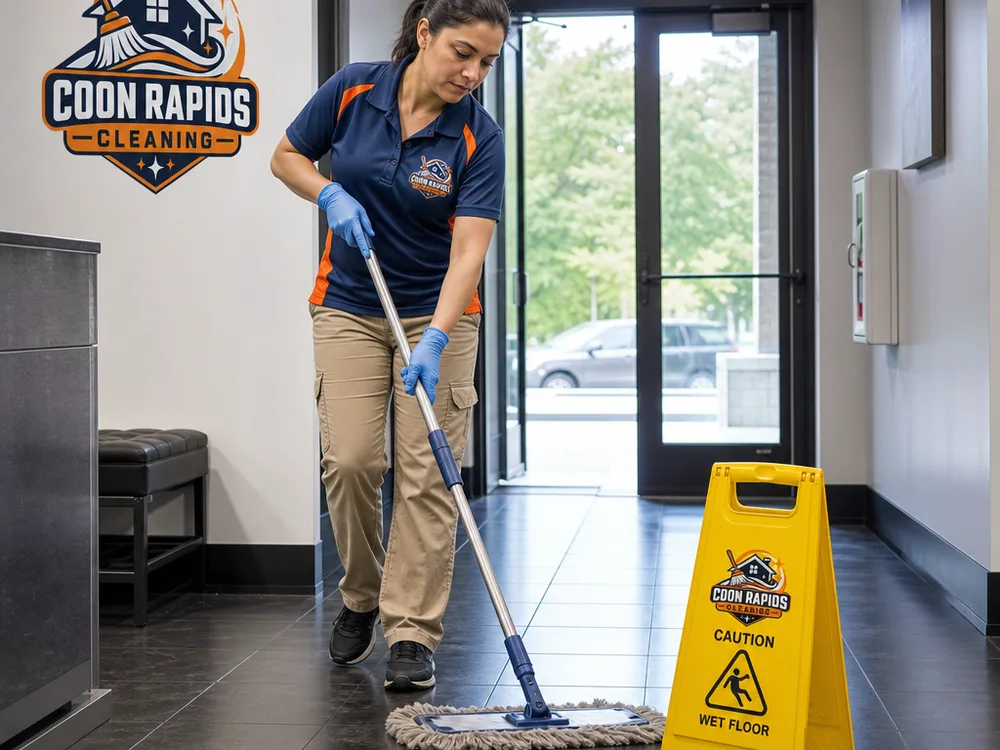
Finish takes traffic only once it cures, so coats are scheduled with real time between them. You get the hours an area must stay clear before anyone walks on it, rolls a cart over it, or puts furniture back.
How long the finish lasts depends on what happens next: matting at the doors, dust mopping before damp mopping, and a neutral cleaner instead of anything acidic. We write down the routine that protects the work.
A floor job is planned around cure time, because a finish that cannot dry undisturbed will not last. That shapes the assessment, the schedule, the prep, and the finish itself.
Request a CallbackWe look at the surface, the coating left on it, the traffic pattern, and any previous repairs, then say plainly whether the floor needs maintenance or genuine restoration.
The method, the areas, the coats, and the hours a space has to stay empty all go in writing, and the work is scheduled into an evening, a weekend, or a planned closure.
Furniture is moved as agreed, baseboards and transitions are protected, and the area is dust mopped, because any grit left behind ends up sealed into the new finish.
Coats go down with cure time between them, then we walk the floor with you under your own lighting, which is where gloss and any missed edge actually show themselves.
Floor care is priced by method and area, and the method is much the bigger variable. A scrub and recoat covers ground quickly, while a strip and refinish involves removal, rinsing, drying, and several coats, so it occupies the same space far longer for the same floor.
Carpet extraction prices on area and soil level, grout work on the state of the joints, and concrete on whether it is sealed, polished, or bare. Access, furniture, and the hours we are allowed in the building all count, which is why the figure comes after someone has seen the floor.
Floor care is booked as project work rather than another pass with a mop, scheduled when a surface needs stripping, recoating, extraction, or polishing.
Stripping a floor and recoating one are different jobs with different prices, and telling them apart comes first. Cure times, carpet stains, and the care cycle follow.
Look at whether there is finish left to work with. When the coating is dull and scratched but still covering the tile, scrubbing and recoating restores the gloss without removing material. When the finish has worn through to bare tile in the lanes, or yellowed and built up along the edges, stripping is the honest answer.
Finish needs hours to cure, and the exact figure depends on the product, the coats, the humidity, and the air movement in the room. You get the clear time before work starts, and the job is planned so the area is back in use by the time you open rather than while customers are stepping around it.
Soil comes out reliably, and so do most spills that have not dyed the fiber. Anything that bleached or stained the carpet itself cannot be cleaned back out, and we would rather tell you that at the walkthrough than leave you expecting a result the fiber cannot give.
Often, yes. Gloss on polished concrete usually dulls because of residue and fine scratching rather than loss of the polish itself, so cleaning at the correct pH and burnishing brings much of it back. A floor that has lost its polish mechanically needs refinishing, which is a separate scope.
It tracks traffic and entrances more than the calendar. Carpet in a busy lane benefits from extraction well before it looks dirty, since soil reaching the backing is much harder to remove, and hard floors in a salt-season building usually want their recoat planned for spring.
Yes, and on floor work that is usually unavoidable. Most of these jobs run after hours, over a weekend, or during a planned closure, because the floor has to stay empty while it dries and cures. We sequence the sections so the building keeps a usable path throughout.
Tell us the surface and what it looks like now, and we will assess it, say whether it needs maintenance or restoration, and quote the work in writing.
Request a quote
Send the details and we will come back with a written scope and a price.