
A named crew
The same people clean the branch, and you know who they are. Access is not handed to whoever is available, and a change in the crew is something you hear about rather than discover on a camera.
Serving Coon Rapids, Minnesota & surrounding areas
Mon–Fri 8am–6pm Sat 9am–2pm
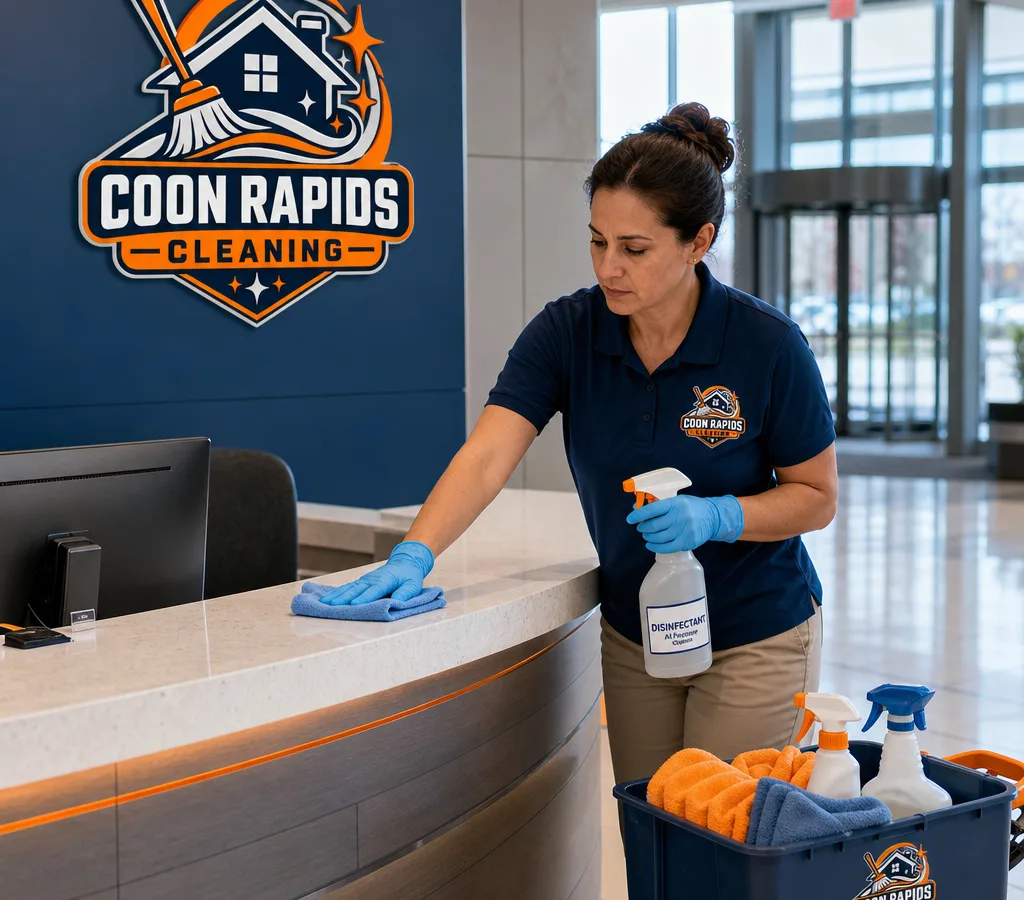
A bank hands a cleaning crew keys, codes, and an empty building with cameras running. Everything about this scope is built around being trusted in that space without anyone watching over the work.
Access
Logged and agreed
Crew
Named, not rotating
Work
Documented against scope
A branch gets cleaned when it is closed, which means the whole arrangement rests on access and conduct rather than on supervision. Who holds a key, what code they use, which doors stay shut, and how an alarm is set and cleared are the first questions, not the last ones.
The cleaning itself is a lobby, teller stations, offices, a break room, and restrooms, all of it ordinary. What is not ordinary is the setting: cameras recording, paperwork on desks that must not be touched, and areas that stay closed to cleaning staff entirely under your own policy.
Access arrangements and schedule changes run through a local team on Northdale Blvd NW in Coon Rapids rather than a distant call center. A branch that moves its closing time or adds a weekend visit needs that conversation to be quick, and with somebody who knows the building.
A branch scope is written area by area, with the restricted spaces named as clearly as the ones we clean, because the exclusions matter as much here as the tasks.
Restricted areas stay restricted. The vault, cash handling areas, server and network rooms, and anywhere your own policy closes to cleaning staff are named in the scope as excluded, and crews do not enter them even when a door is open. Nothing on a desk is moved, read, or discarded unless it is in a trash container.
Access is handled on your terms: the key or code arrangement you specify, the alarm procedure your branch uses, and a record of who was in the building and when. Where you want the work documented against the scope each visit, that becomes part of the routine rather than something requested after a problem.
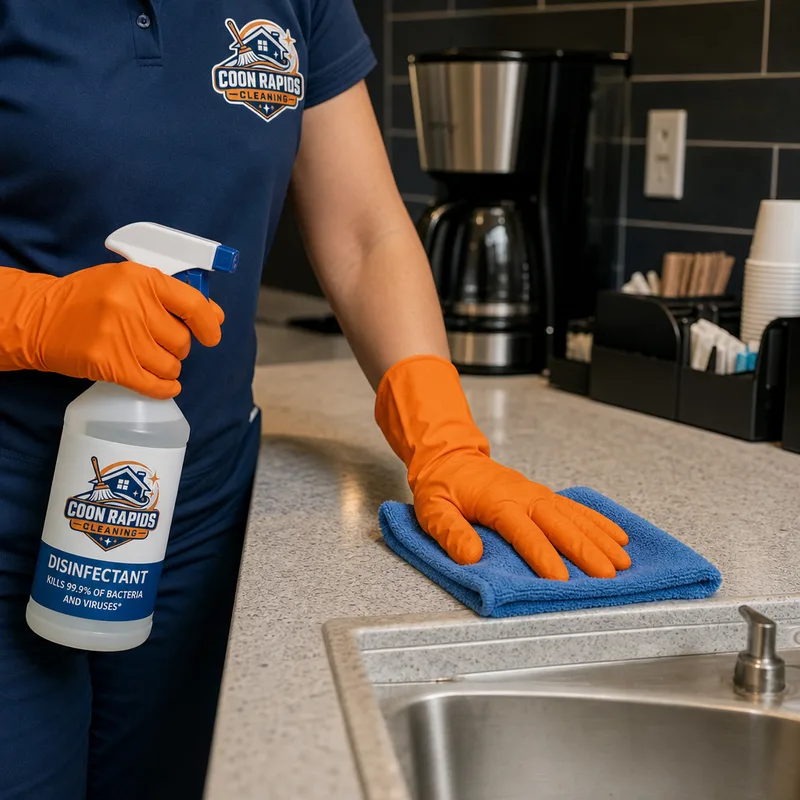
Conduct inside an empty building is what a branch is actually buying: which people come, how they get in, which rooms they never enter, what stays untouched on a desk, and what the record shows afterward.
The same people clean the branch, and you know who they are. Access is not handed to whoever is available, and a change in the crew is something you hear about rather than discover on a camera.
Keys, codes, and alarm procedures follow the arrangement your branch sets. Entry and exit are recorded, and nothing about the routine depends on a crew improvising at the door.
The vault, cash areas, and server rooms are written into the scope as closed. A crew does not enter them because the document says not to, not because a door happened to be locked.
Paperwork, screens, and anything on a desk are left exactly as found. Cleaning works around them, and a desk that cannot be cleaned without moving documents gets reported rather than cleared.
Work is recorded against the written scope, so a branch manager can see what was done without having been there. Questions get answered from a record instead of from memory.
Nothing can be scheduled until access and exclusions are settled, so onboarding covers the walkthrough, the key and alarm arrangement, the written detail, and the review once visits are running.
Request a CallbackTogether we cover the lobby, teller line, offices, break room, and restrooms, marking every area that stays closed to cleaning staff under your policy.
Keys or codes, alarm procedures, the hours the crew may be in the building, and how entry is recorded are all set by you and written down before a first visit.
Every area gets its own list and cycle, the excluded spaces are named explicitly, and the rule about paperwork and equipment is stated rather than implied.
Once a routine is running, the visit records go through with you, the scope gets confirmed against the branch, and frequency shifts where the lobby or restrooms need more.
Branch size and the number of restrooms set the baseline, and the lobby floor type matters because a stone or hard surface lobby needs periodic work a carpeted one does not. Drive up lanes and an ATM surround add exterior work to an otherwise interior scope.
Frequency and access do the rest. A branch cleaned several evenings a week costs more than one on a lighter cycle, and arrangements that require specific access handling, documented visits, or a tighter crew list carry into the quote after a walkthrough.
Branch work is ordinary cleaning in an unusual setting: public lobby surfaces, the customer side of a teller line, offices and break rooms, all of it done after close under the access rules you set.
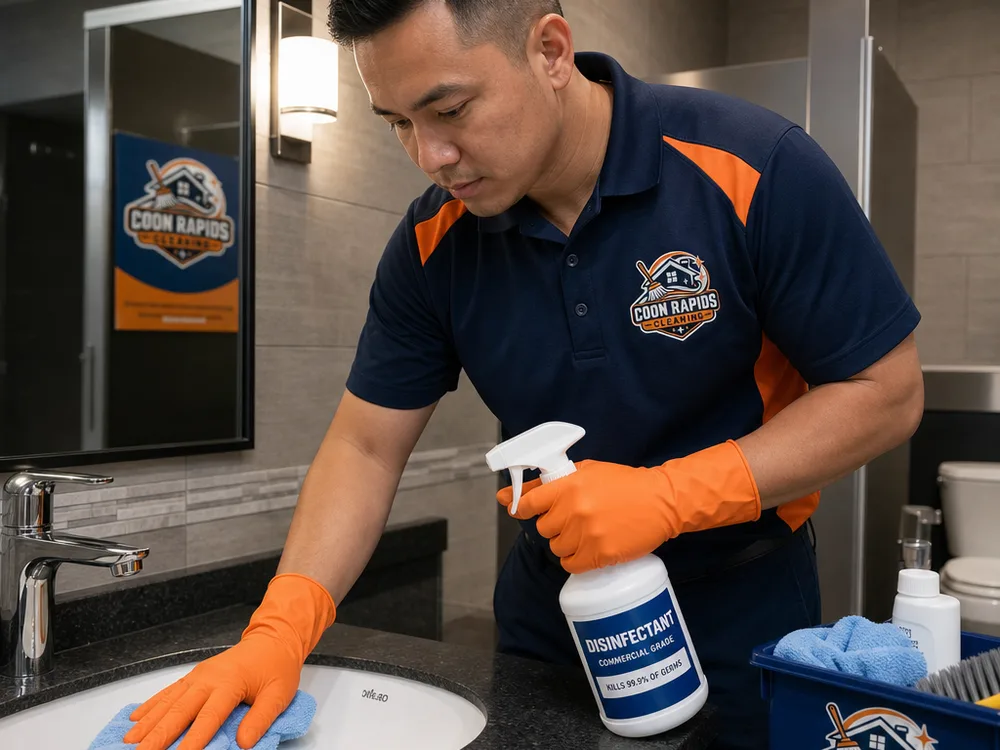
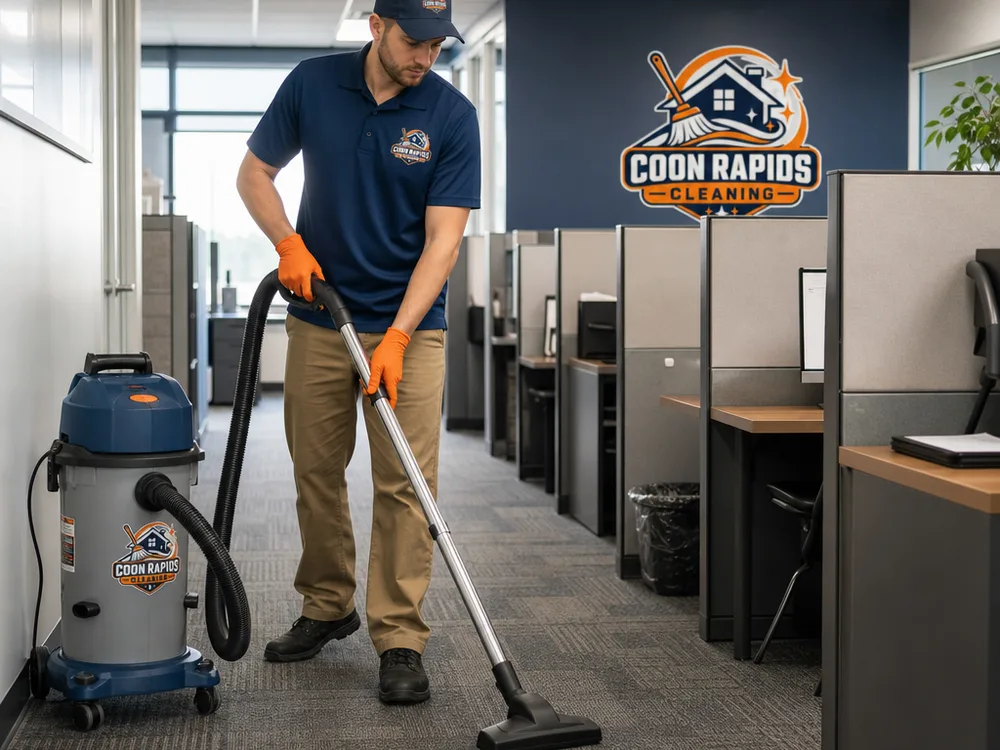
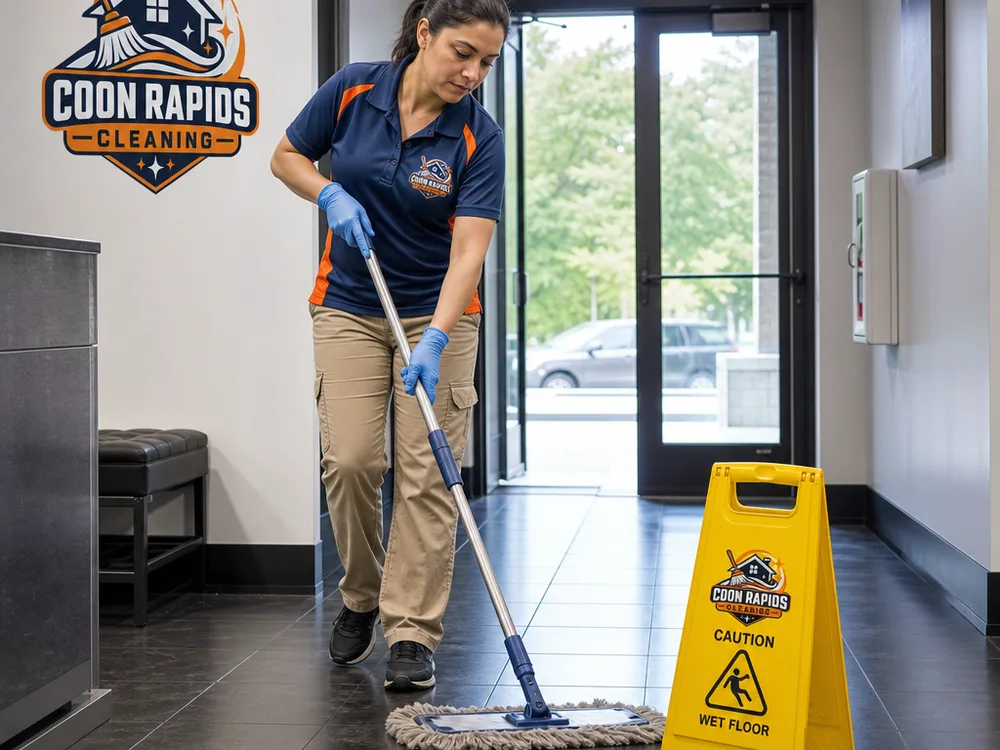
Before a key or a code changes hands, a branch manager wants the uncomfortable questions answered plainly. These deal with access, restricted space, and the record.
On the arrangement your branch specifies. You decide whether a crew holds a key and a code or is let in, which doors are in play, and how the alarm is set and cleared. Entry and exit are recorded, and the whole arrangement is written down before the first visit.
Yes, that is the intent, and it matters more here than in most buildings. A named crew learns the branch and the exclusions, so there is less to explain and less to go wrong. When someone is out, you hear about the replacement rather than finding out afterward.
No. Those areas, along with server and network rooms and anywhere else your policy closes to cleaning staff, are named in the scope as excluded. Crews do not enter them even if a door is unlocked, because the document is what governs, not the state of the door.
It stays exactly where it is. Crews clean around documents and screens and never move, sort, read, or discard anything that is not in a trash container. A desk that cannot be cleaned without moving paperwork is left and reported instead.
That is the normal arrangement for a branch, and effectively all of this work happens after close. The window is set with you, including which evenings are in play and whether a weekend visit suits the branch better than a weeknight once lobby traffic is known.
Yes. Work is recorded against the written scope, so you can check what happened without being in the building. Where a branch wants that review formalized, it becomes part of the routine and the record is available rather than reconstructed later.
Walk the branch with us, name the areas that stay closed, and set the access arrangement you want. The scope and the record are built around what you decide.
Request a quote
Send the details and we will come back with a written scope and a price.