
A written line
The scope names the rooms we enter, the surfaces we clean, and the ones we never touch. A new crew member works from the same document, so the boundary does not depend on who is on shift.
Serving Coon Rapids, Minnesota & surrounding areas
Mon–Fri 8am–6pm Sat 9am–2pm
A medical building has two cleaning jobs in it, and only one of them belongs to a cleaning contractor. We handle the housekeeping side and keep the clinical boundary written down rather than assumed.
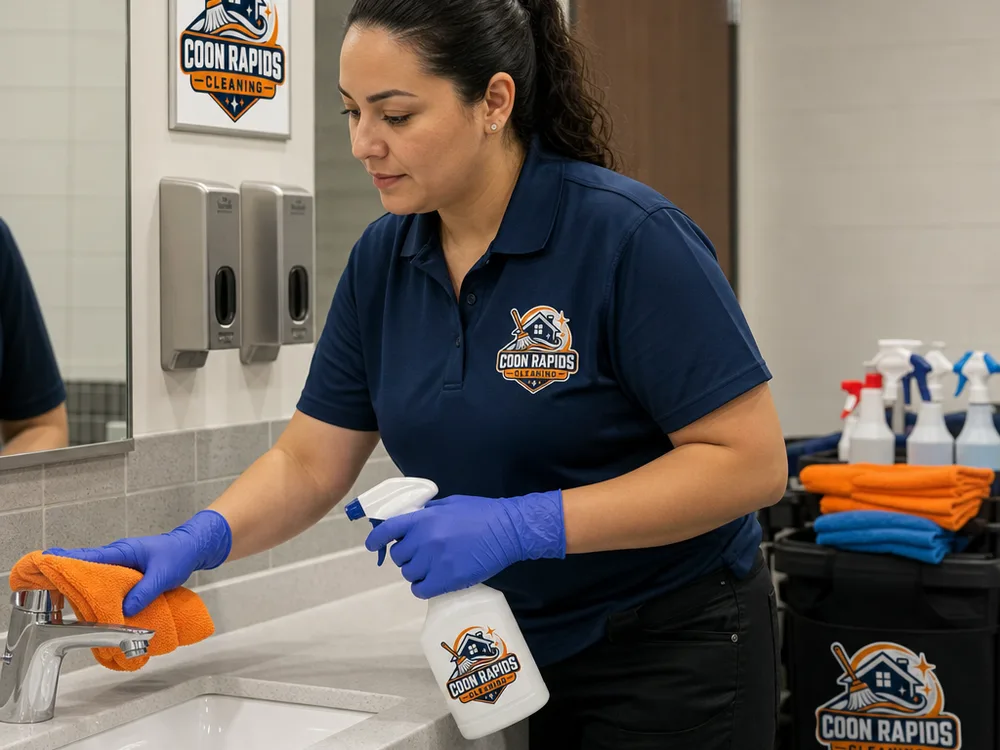
Boundary
Written, not assumed
Scheduling
After the last patient
Cross contact
Separated cloths and tools
The useful conversation in a medical building is about division of labor. Reception, waiting areas, corridors, restrooms, break rooms, and administrative offices are housekeeping. Treatment surfaces, instruments, regulated waste, and anything your infection control policy assigns to clinical staff stay with your own team.
That line has to be written down, because an unwritten one gets crossed in both directions. We put in the scope which rooms we enter, which surfaces we clean in them, what we never touch, and what we leave for your staff to handle after we go. Nothing in a clinical space gets improvised.
Our office is on Northdale Blvd NW in Coon Rapids, which keeps scheduling and scope changes close to hand when a clinic's hours shift. Practices here run tight appointment calendars, so the work fits after the last patient or before the first, on a window you set.
Here the scope goes room by room rather than task by task, because in a medical building the room decides who is responsible for the surfaces inside it.
Terminal cleaning, instrument reprocessing, sharps, and regulated waste are clinical responsibilities and stay with your staff. We do not handle them, move them, or clean the containers that hold them, and the scope says so in plain language rather than leaving it to judgment on the night.
Cross contact is managed with separated cloths and tools between restrooms, clinical floors, and staff areas, and with the dwell time a disinfectant needs rather than a quick pass. Where your facility requires a specific product or method, we work to that as written.
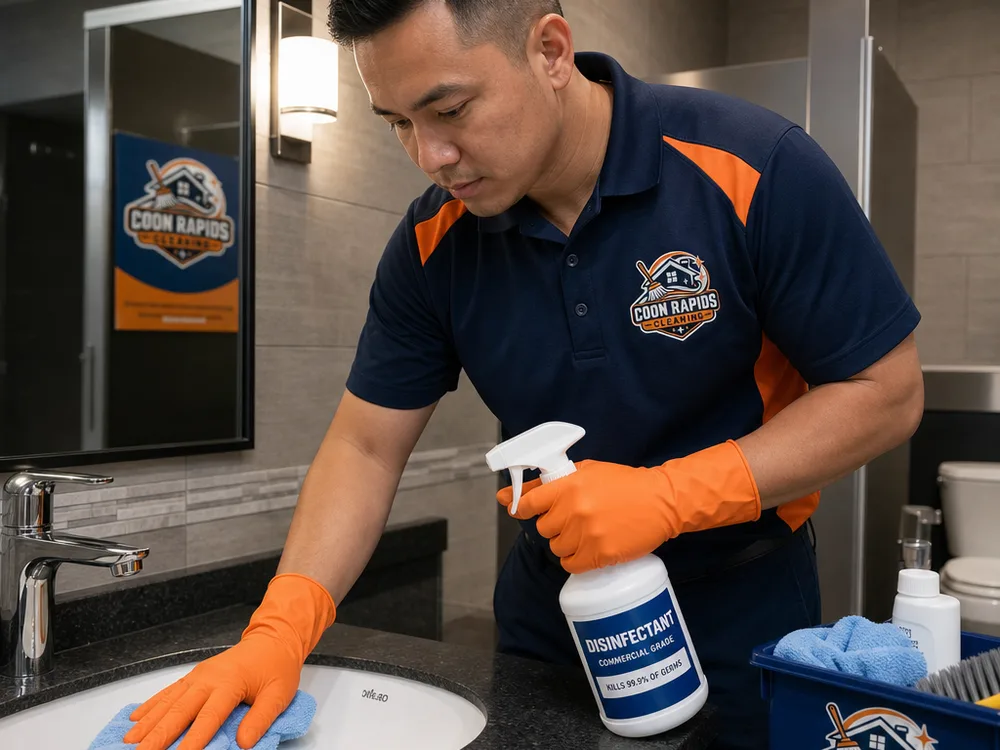
A practice is buying a boundary that holds rather than general cleaning, which shows up in the written line, the timing around appointments, the separated tools, the dwell times, and the discretion.
The scope names the rooms we enter, the surfaces we clean, and the ones we never touch. A new crew member works from the same document, so the boundary does not depend on who is on shift.
Work runs after the last appointment or before the first, on the window you set. Where a room is in use, it gets skipped and reported rather than entered, and the schedule absorbs that.
Cloths, mops, and tools are kept apart between restrooms, corridors, and staff areas so soil does not travel between them. Color coding makes that visible instead of a matter of trust.
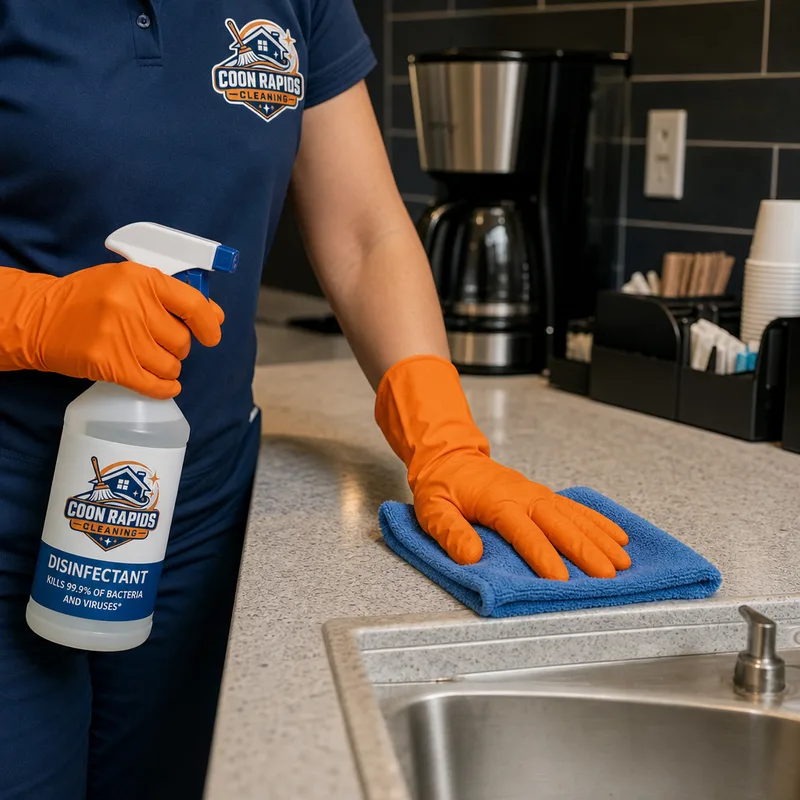
A disinfectant only works if it stays wet for its stated time, so the sequence is built to allow it. Wiping a surface dry on the same pass is the common way that gets lost.
Patient areas carry conversations and paperwork that are none of our business. Crews work without handling documents, without opening anything that is closed, and without discussing what they see.
Responsibility gets settled before anyone cleans, which means walking the rooms, recording the boundary, agreeing the hours, and checking the result against what the practice actually does.
Request a CallbackGoing through the building with you, we mark which spaces are housekeeping, which are shared, and which stay closed to our crews entirely under your policy.
Rooms, surfaces, the products your facility requires, and the work staying with your clinical staff all get recorded in language a new crew member can follow.
Hours are agreed around your appointment calendar, including how we get in, who locks up, and what happens when a room is still occupied at our start time.
The scope gets checked against what actually happens on site, since a practice that adds a room or a late clinic changes what housekeeping can reach.
Room count and the number of restrooms matter more than total floor area in a clinic, because the work is concentrated in small spaces with a lot of touchpoints. The number of exam rooms we are allowed to enter, and what we may clean in them, changes the time on site.
Frequency and timing do the rest. A practice open six days with evening clinics needs more visits in tighter windows than one running weekday hours, and a facility that requires specific products or methods carries that into the scope and the quote.
Clinic housekeeping covers the nonclinical building: reception and waiting areas, corridors, restrooms, staff rooms, and administrative offices, with clinical surfaces left to your own team.
Responsibility is the real subject whenever a practice asks about cleaning, so each answer names which side of the clinical line the task falls on.
Floors and trash in exam rooms, where your policy lets us in. Treatment surfaces, instruments, and anything your infection control policy assigns to clinical staff stay with your team. The scope names the rooms and the surfaces either way, so nobody is guessing on the night.
No. Sharps containers, regulated waste, and their holders stay with your staff, and we do not move them or clean them. Ordinary office and restroom trash is ours. Keeping those streams separate in writing is part of the scope rather than an informal understanding.
Usually, yes. Most practices prefer the work after the last appointment or before the first, and the window is set with you. Where a room is still occupied when we reach it, the crew skips it and notes it rather than entering, and the next visit picks it up.
That is the goal, and it matters more here than in most buildings, because a crew that knows which doors stay closed makes fewer mistakes. If somebody is away, their replacement follows the same written scope rather than a verbal handover.
Yes, where you specify them. Some practices require a particular disinfectant or a particular method, and we work to that as written and keep it in the scope. Where you have no preference, we bring products suited to the surface and respect the contact time they need.
Dental offices are the same split: reception, corridors, restrooms, staff areas, and administrative offices are housekeeping, while operatory surfaces, instruments, and waste stay with your team. The scope is written room by room the same way.
Walk the building with us and tell us where housekeeping stops. We will put the boundary in writing with the scope, and work the hours your appointment calendar leaves open.
Request a quote
Send the details and we will come back with a written scope and a price.