
Handback time
The kitchen gets back on a schedule you set, dry and reassembled. Nothing is left soaking, no mat is still wet, and no piece of equipment is standing where it does not belong.
Serving Coon Rapids, Minnesota & surrounding areas
Mon–Fri 8am–6pm Sat 9am–2pm
A kitchen has to be ready for the next service, which makes handback time the real constraint on restaurant cleaning. We work the hours between close and open, and we treat grease as its own problem.
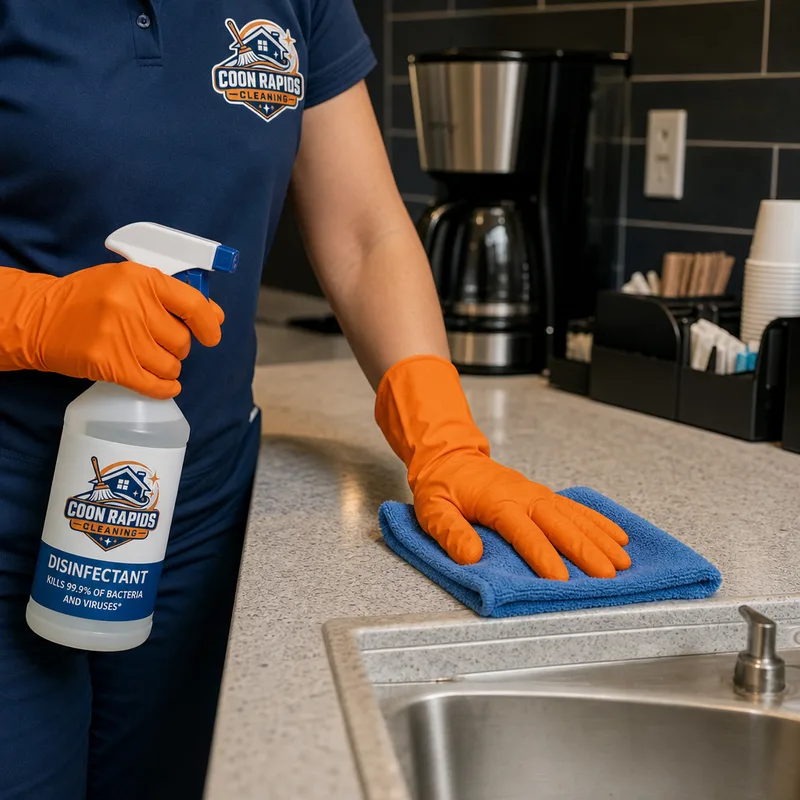
Scheduling
Between close and open
Kitchen surfaces
Degreased, not just wiped
Scope
Written before the first shift
Restaurant cleaning is governed by a deadline rather than a checklist. The kitchen has to pass the next opening check, which means the work happens in the hours after close, and everything we touch has to be dry, reassembled, and back in position before the first prep cook arrives.
Grease behaves nothing like dust. It migrates onto walls, ceilings, and the tops of equipment, it holds onto soil instead of releasing it, and it needs the right chemistry and real contact time instead of a faster wipe. Floor drains, quarry tile grout, and the gaps behind the line are where it collects.
Our office on Northdale Blvd NW in Coon Rapids keeps a schedule built around your service times local to adjust. Restaurants here deal with winter salt tracked through the dining room and a grease load that climbs through a busy season, and both of those belong in the scope.
Scope on a restaurant splits cleanly between the kitchen, where the work is chemical and physical, and the dining room, where it is about what a guest sees.
Hood interiors and grease ducts are specialist work on their own schedule, and we coordinate around it rather than claim it. What we do is keep the surfaces around that equipment from building up between those visits, which is usually what an inspection notices first.
Minnesota winters push the problem to the front of the house. Road salt and meltwater arrive through the entry on every guest, and the dining room floor shows it faster than anything in the kitchen, so matting and hard floor attention climb in the cold months.
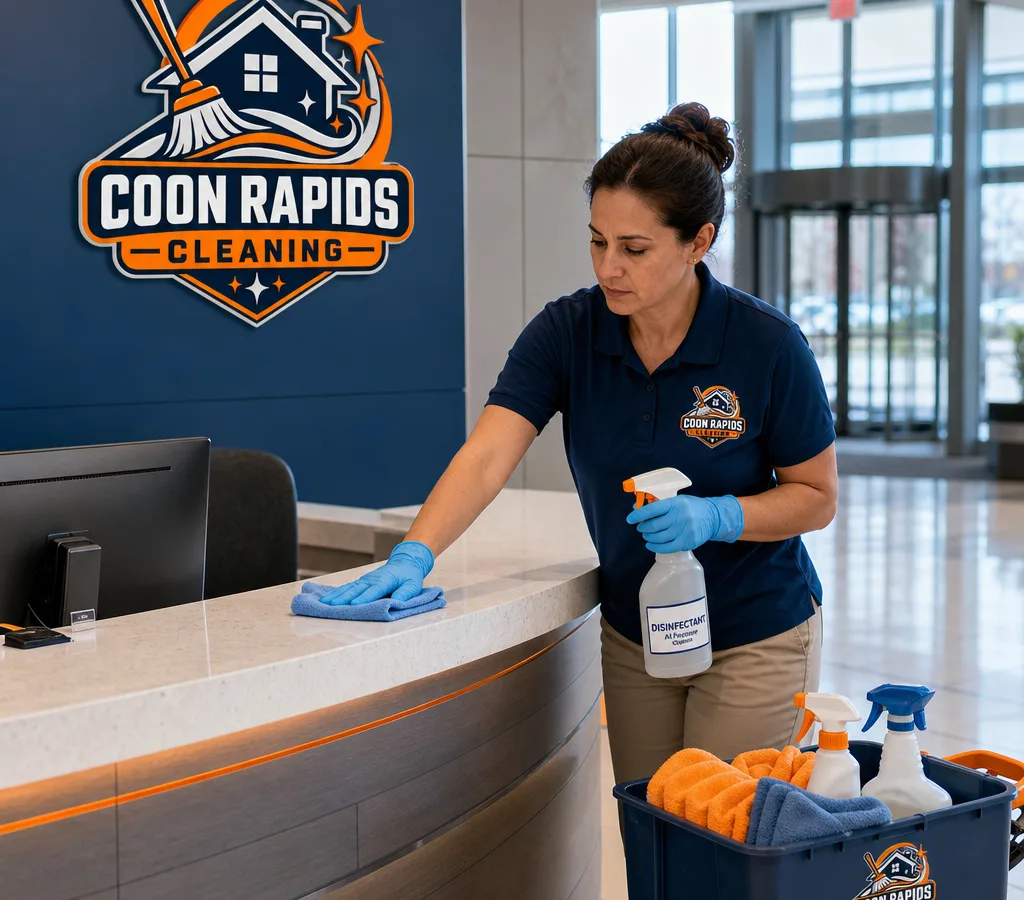
Everything a kitchen crew is judged on sits between close and open: the handback, the chemistry grease needs, the floor and drains, the products allowed on food surfaces, and what a guest sees out front.
The kitchen gets back on a schedule you set, dry and reassembled. Nothing is left soaking, no mat is still wet, and no piece of equipment is standing where it does not belong.
Degreasers need contact time to work, so the sequence allows for it rather than scrubbing against the clock. Hot surfaces and finished metals each get a product that will not dull or streak them.
Odor usually starts at the floor. Drain covers come up, the channels get cleaned, and grout gets scrubbed rather than mopped over, because a mop spreads a grease film instead of lifting it.
Kitchens often specify what may touch a food contact surface. We work from your list where you have one, and we keep cloths and tools separated between kitchen zones and restrooms.
A guest reads the dining room before the food arrives. Glass, table bases, booth seams, and the floor along the entry get attention because that is what gets noticed from a seat.
Fitting a restaurant into a cleaning schedule means working around service, so setup covers the walkthrough, the hours available, the written detail, and the seasons that change the load.
Request a CallbackSomeone walks the line, the dish area, the floor and drains, and the dining room with you, then asks what your own staff already closes down each night so the scope does not overlap.
The hours are set against your service times, including the nights when a late close shortens the gap, and we confirm who locks up and how we get in and out.
Everything agreed goes on paper: the task list, the frequencies, the products allowed on food contact surfaces, the equipment left alone, and the work belonging to a specialist.
Frequencies get tuned to the real load once a few weeks have run, because a patio season or a holiday stretch changes what the kitchen and the dining room need.
Kitchen size and the amount of cooking equipment matter more than the dining room seat count. A fryer heavy menu puts more grease on more surfaces than a kitchen built around a flat top, and that shows up in both time on site and the chemistry needed.
The rest comes from frequency, the hours you need the work done in, the floor type, and the condition at the start. A kitchen with grease already built into the grout needs a reset before a routine schedule can hold it, and we price that separately after a walkthrough.
Food service work divides between a kitchen, where the job is grease, drains, and equipment surfaces, and a dining room, where it is the floors, glass, and seating a guest reads on arrival.
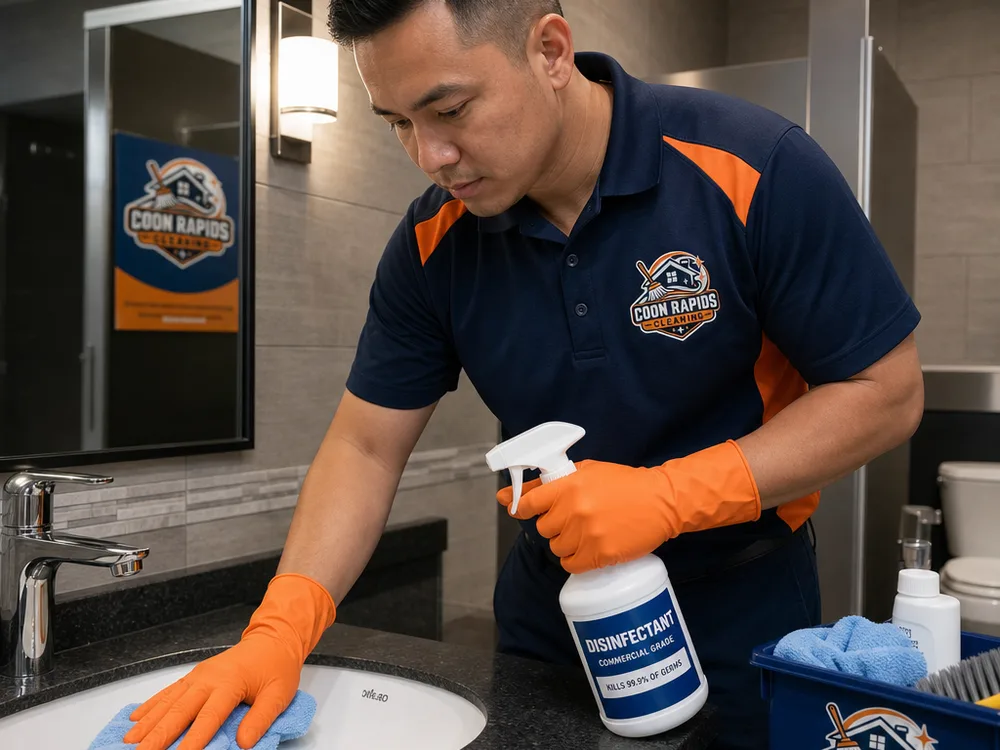
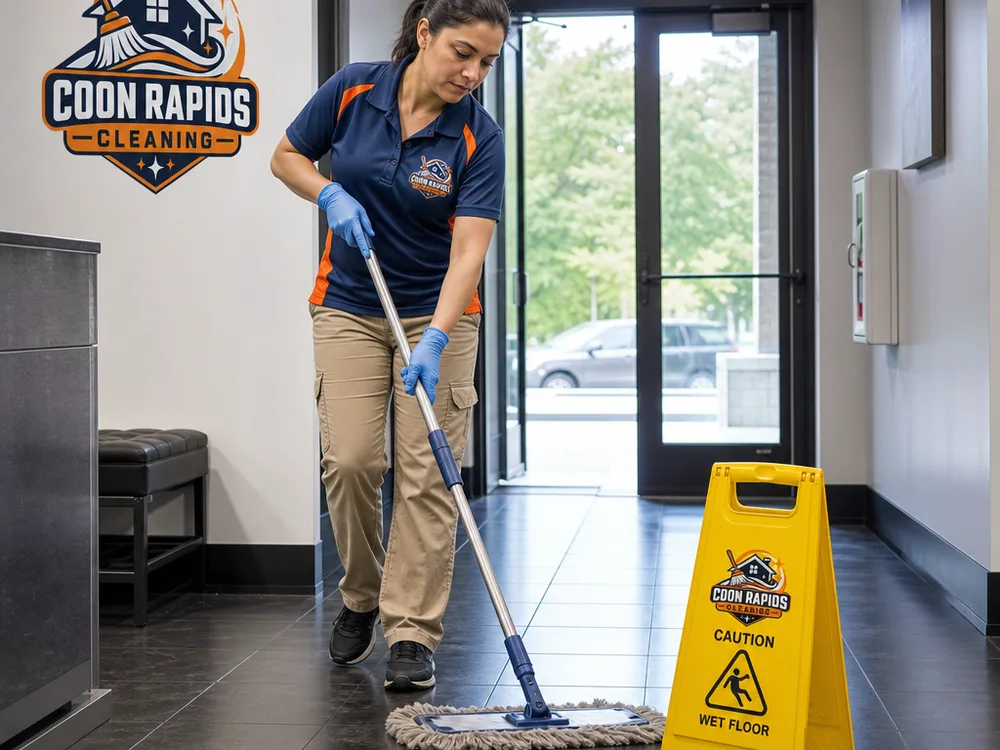
Grease, drains, and a hard deadline account for most of what an operator needs to know, along with where a cleaning contractor stops and a specialist starts.
After close, or before open, on a window agreed with you. The work is planned so floors are dry and equipment is back in place before the first prep cook arrives, and a late close that shortens the gap gets a shorter task list rather than a rushed one.
Hood interiors and the duct run are specialist work with its own schedule, and we do not claim it. We clean the surfaces around that equipment, including the walls, the shelving above the line, and the equipment exteriors, so buildup between those visits stays under control.
Yes, and it takes scrubbing rather than mopping. Grease sits in the grout lines and in the texture of quarry tile, so the floor gets a degreaser with contact time and mechanical agitation. On a floor carrying years of buildup, the first visit is a reset and the routine holds it afterward.
Either side can. Many kitchens specify what may touch a prep surface, and we work from your list and your dispensers where you have them. Where you would rather we bring everything, we do, and the products used on food contact surfaces go in the written scope.
Yes, and most restaurant scopes include both. The dining room work is about what a guest sees from a seat: table and chair bases, booth seams, sills, entry glass, and the floor along the path from the door. Restrooms are usually on the same visit.
Frequencies change rather than the scope. A patio stretch or a holiday run puts more traffic through the front of house and more grease on the line, so the schedule can tighten for those weeks and ease back afterward without renegotiating the whole agreement.
Tell us your service times and what your own closing routine already covers, and we will build a scope that fits the gap between close and open.
Request a quote
Send the details and we will come back with a written scope and a price.