
The first impression
Entry glass, the mat, and the floor inside the door get attention before anything else, because that is the part of the store a customer reads before they have looked at a single product.
Serving Coon Rapids, Minnesota & surrounding areas
Mon–Fri 8am–6pm Sat 9am–2pm
A customer decides what your store is like in the first few seconds inside the door. Retail cleaning is mostly about protecting that impression, starting at an entrance that takes everything the weather brings.
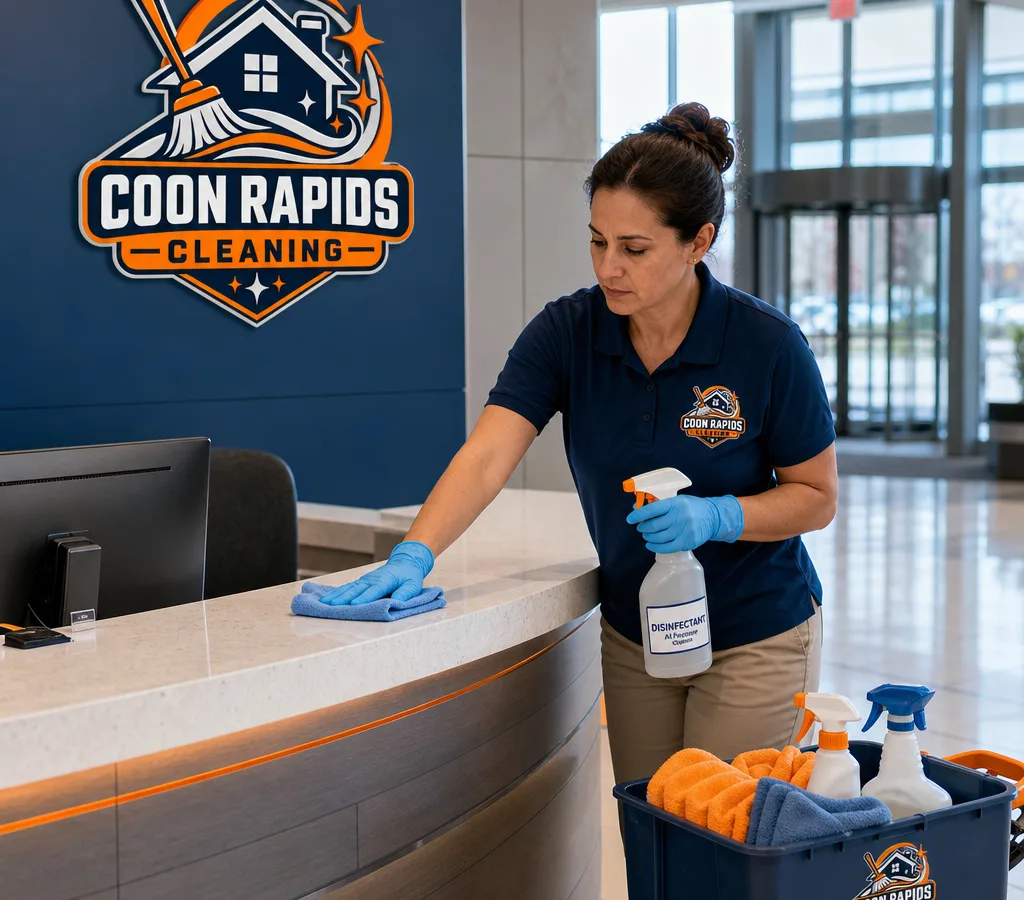
First impression
Entrance and glass first
Timing
Around trading hours
Public restrooms
Checked every visit
Retail cleaning is judged in the first few steps. The entry floor, the glass on the door, and the sight line down the main aisle tell a customer how the store is run, and none of it survives a week of Minnesota weather without attention at the right frequency.
Behind that, the work is ordinary and relentless: hard floors that keep their shine under cart and foot traffic, shelving edges that collect dust at eye level, checkout counters handled by everyone, fitting rooms that need a look between customers, and public restrooms that shape an opinion all by themselves.
A store or a center manager can get a schedule changed through our Northdale Blvd NW office in Coon Rapids rather than a distant dispatcher. Winter here puts salt, sand, and water through the door on every customer, and a retail scope that ignores the entrance fails in January.
A retail scope is organized by what the customer sees first and what gets touched most, then works back toward the stockroom and the back of house.
Shopping centers add common areas to the same conversation: corridors, entrances shared between tenants, seating, and the restrooms that carry the whole center's traffic. Those are scoped separately from any individual store so responsibility stays clear between the center and its tenants.
Trading hours decide the shape of the work. Most of it happens after close or before open, while spills and restroom checks during the day belong to a different arrangement, and a center with late hours gets a window that fits them rather than one that suits us.
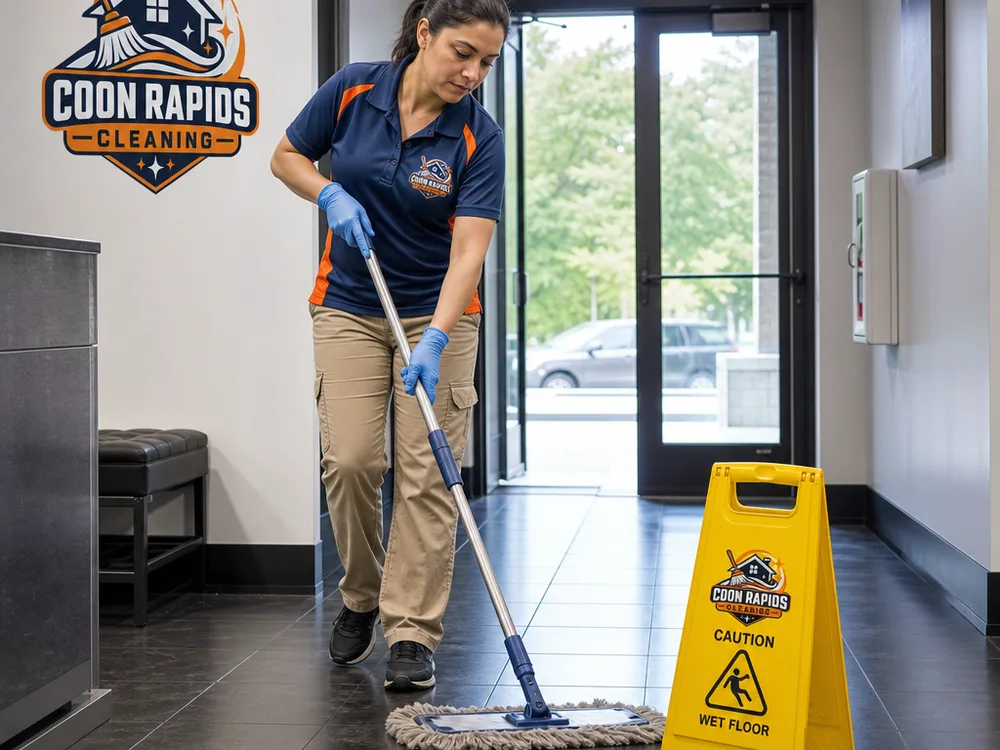
A store is read in the first few steps, so the work protects the entrance, the weather coming through it, the floors under cart traffic, the surfaces strangers handle, and the restrooms.
Entry glass, the mat, and the floor inside the door get attention before anything else, because that is the part of the store a customer reads before they have looked at a single product.
Salt, sand, and melt water arrive on every pair of shoes in winter. Matting gets washed rather than shaken out, and entry floors go on a tighter frequency through the cold months.
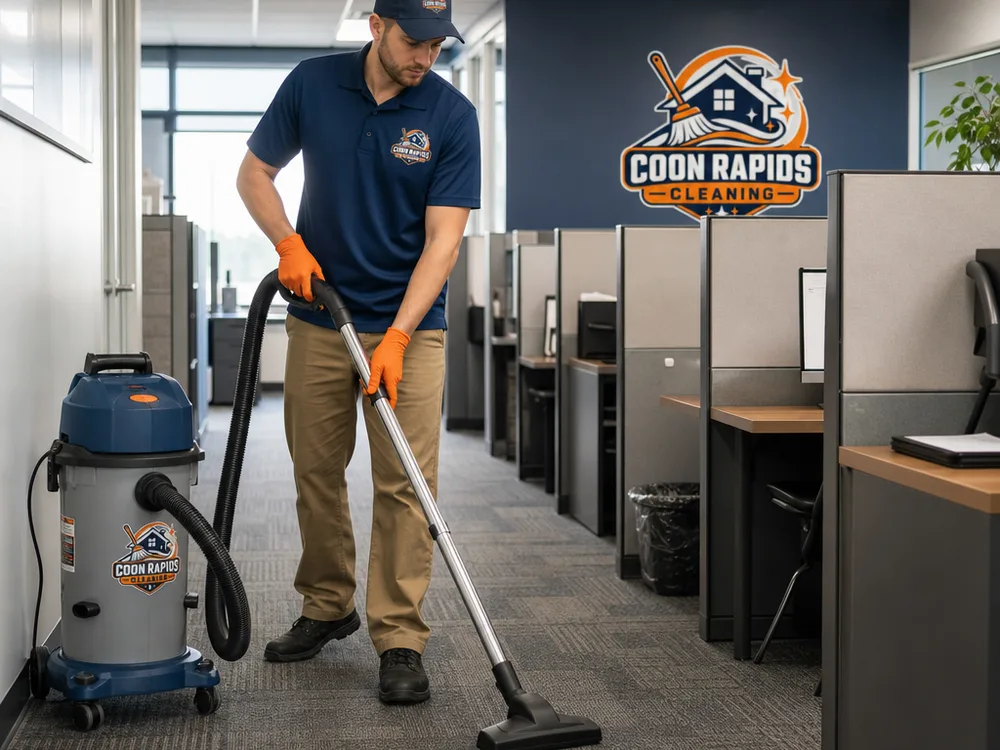
Hard floors keep their finish longer with the right routine and the right pads, and carpet lasts longer when traffic lanes get vacuumed properly rather than passed over at speed.
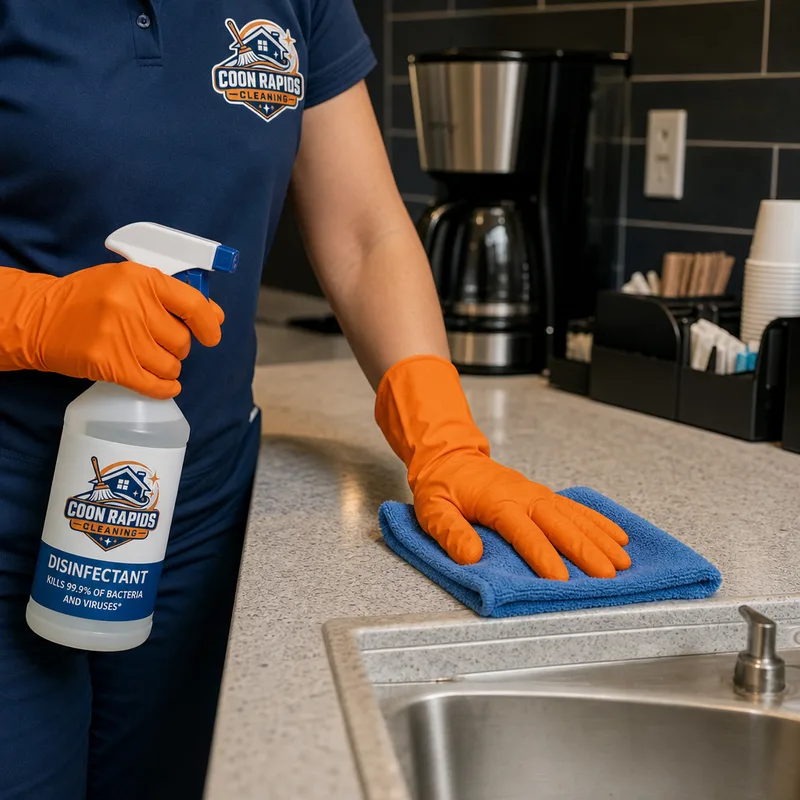
Handles, card terminals, counters, and fitting room hooks are handled by strangers all day. They get cleaned and disinfected as a named part of the scope, not as an afterthought.
A public restroom changes what a customer thinks about the whole store. It gets serviced, restocked from your supplies, and checked on every visit rather than when it looks bad.
Trading hours decide almost everything about a retail scope, so setup starts from the building, then the hours, the written detail, and the seasonal swings that follow.
Request a CallbackThe entry, the floor types, the aisle layout, the fitting rooms, the restrooms, and the back of house all get looked at, along with what your own staff handles during trading.
The window is agreed against your trading hours, including late nights and weekend patterns, along with alarm procedures and how the crew gets in and out.
Each area gets its own task list and frequency, with the entry and restrooms usually on the tightest cycle and fixture dusting on a rotation that covers the floor over time.
Frequencies move with the calendar, since a holiday trading period and a January thaw both put more through the door than a quiet week in autumn.
Floor area matters, but the floor type and the traffic matter more. A store with hard floors down every aisle and a single entrance is a different job from a center with carpet, multiple entries, and restrooms carrying traffic from every tenant.
Then it is frequency, the hours you need, and how much is expected during trading rather than after close. Fitting rooms, public restrooms, and an entrance in winter are the areas that usually decide whether a store needs more visits a week.
Retail work concentrates where customers and weather arrive: entrances and matting, sales floor surfaces, fixtures at eye level, checkout counters, and the restrooms shoppers judge a store by.
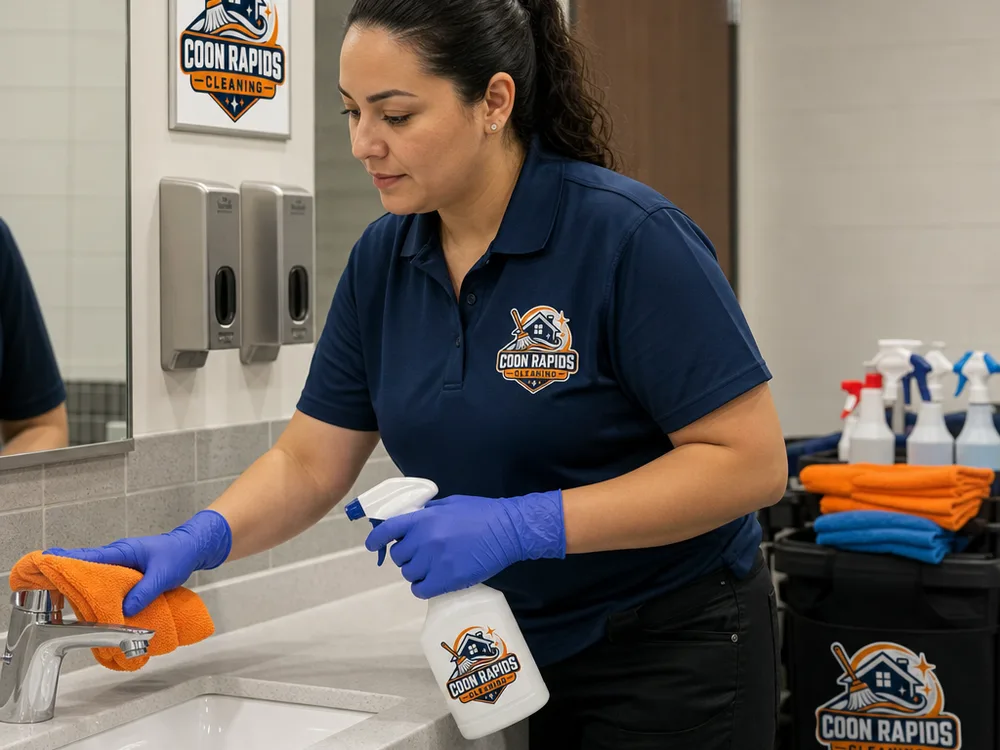
Whether this is one store or a whole center changes several of these answers, and the rest come down to hours, the entrance, and who handles a spill at noon.
The main work happens once the doors are locked, because a crew working around customers slows both of us down. Spill response and restroom checks during trading are a separate arrangement, and some stores keep those in house while others add a day porter visit.
Matting gets washed and dried rather than shaken out, and the entry floor moves to a tighter frequency through the cold months. Salt and sand grind into hard floors and carpet backing, so the track-off zone is where attention goes first.
Yes, and they need more than a vacuum. Hooks, benches, mirrors, and the floor in each room get handled, and anything left behind is set aside for your staff rather than discarded. During a busy period they usually move to a tighter cycle.
Yes, and common areas are scoped separately from individual tenants so responsibility is clear. Corridors, shared entrances, seating, and center restrooms sit in the center scope, while a tenant's own space is its own agreement.
Either side can. Most centers and stores prefer to buy their own consumables and have us fit and refill the dispensers, which keeps the brands consistent. If you would sooner we supplied them, that goes in the scope with everything else.
With the right routine, yes, and it depends on more than the visits. Matting at the doors, the pads used, and periodic burnishing or recoating all decide how long a finish holds under cart traffic. Heavier restoration work is quoted on its own.
Tell us your trading hours and where the weather gets in, and we will put together a scope that keeps the entrance, the floors, and the restrooms ahead of the traffic.
Request a quote
Send the details and we will come back with a written scope and a price.