
Hair at the edges
Sweeping the middle of a floor is easy and not the problem. Hair gathers at edges, in corners, and under toe kicks, so those get reached deliberately on every visit rather than when they look bad.
Serving Coon Rapids, Minnesota & surrounding areas
Mon–Fri 8am–6pm Sat 9am–2pm
A salon has to feel calm and look immaculate while generating hair, product residue, and water all day. The cleaning problem is that the mess is constant and the standard is a space people relax in.
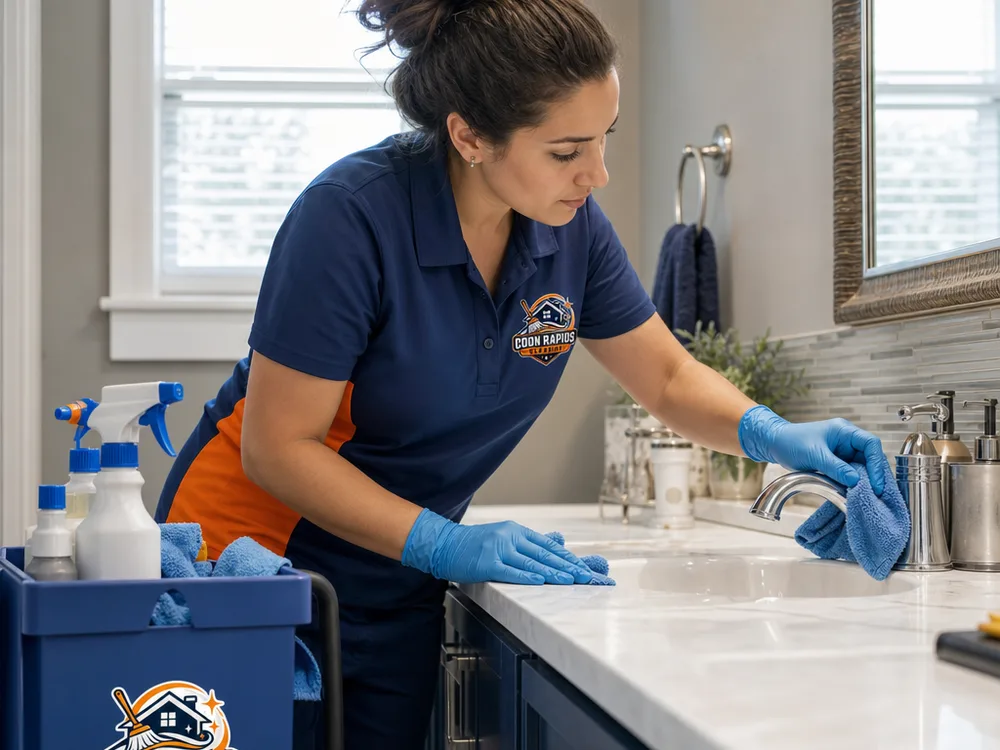
Floors
Hair cleared to the edges
Surfaces
Product residue removed
Feel
Calm and uncluttered
Two things make a salon different. The first is hair, which travels further than anyone expects, collects at floor edges and under cabinet toe kicks, and sticks to anything damp. The second is product: sprays, waxes, color, and oils that leave a film on mirrors, stations, and the floor around a chair.
The standard is higher than the mess suggests, because a client is paying partly for an hour of calm. Streaked mirrors, a dusty shelf of retail products, or hair in a corner reads as carelessness in a way it would not in a workshop, and treatment rooms have to feel genuinely clean.
A schedule can follow a salon's real rhythm rather than a fixed slot, arranged through our Northdale Blvd NW office in Coon Rapids. Water adds to all of it: shampoo areas, pedicure stations, and treatment rooms stay damp, which is where residue and odor start if left alone.
The scope follows the two materials that define the space, hair and product residue, then the wet areas where both end up collecting.
Tools, implements, and anything your licensing requires to be disinfected by your own staff stay with them. Our crews handle the room, the station, and the surfaces around the work, and that split is recorded rather than left to be assumed on a busy evening.
Water is the thing most salon scopes underestimate. Shampoo bowls, pedicure stations, and treatment rooms stay damp, and damp plus product residue is where odor and scale begin, so those areas get descaling and drying attention rather than a wipe on the way past.
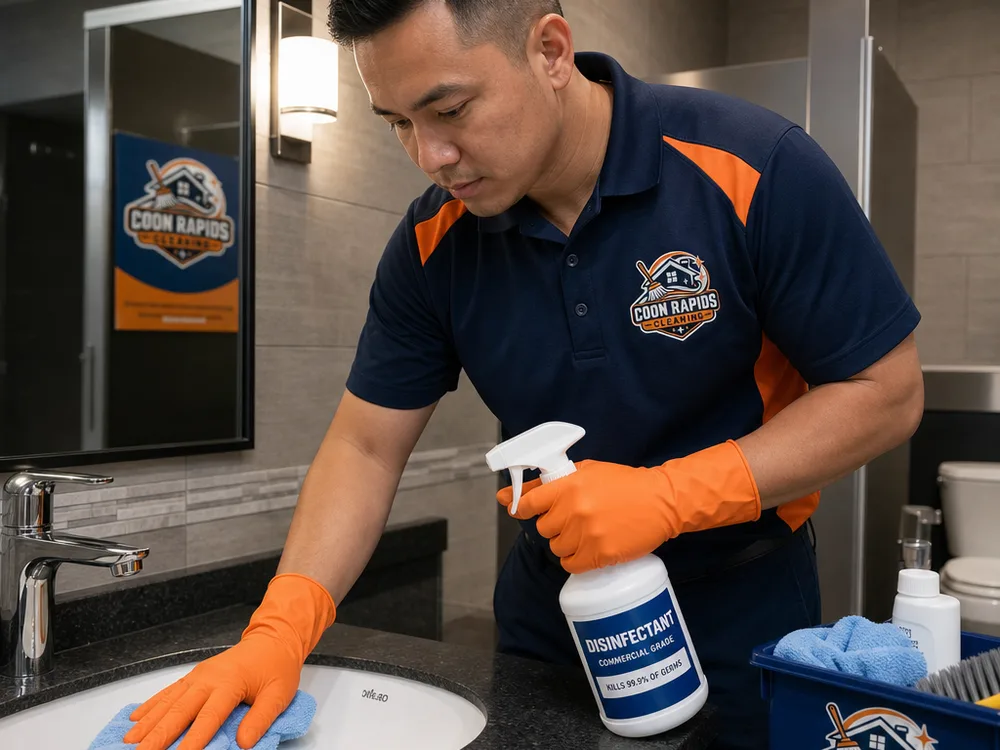
A client judges a salon from a chair or a treatment bed, which is a close view: floor edges, product film, damp areas, the calm of a room, and the implements that stay with your own staff.
Sweeping the middle of a floor is easy and not the problem. Hair gathers at edges, in corners, and under toe kicks, so those get reached deliberately on every visit rather than when they look bad.
Product film needs a cleaner that cuts it, not a dry dusting that moves it around. Mirrors, stations, and shelving get treated for residue so surfaces look clear instead of hazy under the lights.
Shampoo bowls, sprayers, and pedicure stations get descaled and dried rather than rinsed. Standing water and residue together are where odor starts, and that is a frequency question not a product one.
A treatment room is judged at close range by someone lying still. Surfaces, trolleys, baseboards, and the floor under the bed are cleaned because that is the view the client actually has.
Implements and anything your licensing assigns to your staff are left to them. We clean the space around the work, and the written scope keeps that boundary clear.
An appointment book leaves narrow hours, so getting going means seeing the space, settling the window, agreeing the detail in writing, and tuning frequencies once the work has run a while.
Request a CallbackWe look at the floor surfaces, the stations, the shampoo and pedicure areas, the treatment rooms, and retail, and ask what your staff already does at the end of a day.
Your appointment book decides the window, including late evenings and weekend patterns, and we confirm how the crew gets in and who locks up at the end.
What gets cleaned, how often, and which products may touch your finishes are all recorded, along with the implements your own staff handles under licensing.
After a few weeks we adjust, since a salon with heavy color work or a busy pedicure schedule needs more attention in specific areas than a general cycle assumes.
Station count and the number of wet areas drive this more than floor area. Shampoo bowls, pedicure stations, and treatment rooms each take real time, and a salon doing heavy color or wax work leaves more residue on more surfaces than one doing cuts alone.
Frequency comes next, along with the hours around your appointment book and the floor and counter materials, since some finishes need gentler products and more care. A salon with residue already built up gets a reset first so a routine schedule can hold the standard afterward.
Salon work follows hair and product residue: floor edges and toe kicks, stations and mirrors, the shampoo and pedicure areas that stay damp, and the treatment rooms clients study at close range.
Licensing settles part of this and the rest is about what beats a tired team at closing, so the answers separate your staff's work from ours.
By working the edges rather than the middle. Hair collects along baseboards, in corners, and under cabinet toe kicks, and a quick sweep through the center of the room leaves all of it. Those areas get reached on every visit, then the floor is cleaned to suit the surface.
Yes, and it needs a cleaner that cuts film rather than a dry wipe. Spray, wax, and oil leave a haze that dusting just redistributes. Mirrors are polished to avoid streaking under salon lighting, and station counters are cleaned for residue rather than appearance alone.
No. Implements, and anything your licensing requires your own staff to disinfect, stay with them. The space around the work is ours: stations, counters, chairs, floors, and the wet areas. That split is written down so it is not decided on a busy evening.
They are usually the highest priority in a salon scope. Bowls, fixtures, sprayers, and the surrounds get cleaned and descaled, and the floor around them dried, because standing water with product residue in it is where odor and scale begin.
After the last appointment or before the first, on a window agreed with you. Salons often run late, so the hours are set against your real closing time rather than a standard slot, and a late night can take a shorter task list instead of a rushed full one.
Yes, because a client studies them from a bed at close range. Surfaces, trolleys, baseboards, and the floor beneath the bed get attention, and the room is left uncluttered and dry. Anything clinical that your own policy assigns to staff stays with them.
Tell us your closing times and where residue and hair beat your staff at the end of a day. The edges, the wet areas, and the rooms clients study are where a scope would start.
Request a quote
Send the details and we will come back with a written scope and a price.