
Working low
The crew cleans at the height the building is used. Table undersides, chair backs, cubby shelves, and the lower wall surfaces get attention, because that is where hands and sleeves make contact all day.
Serving Coon Rapids, Minnesota & surrounding areas
Mon–Fri 8am–6pm Sat 9am–2pm
Children touch everything at a height adults walk past, and a school day cannot be moved to suit a cleaning crew. Both facts shape the scope, the timing, and what gets reached first on every visit.
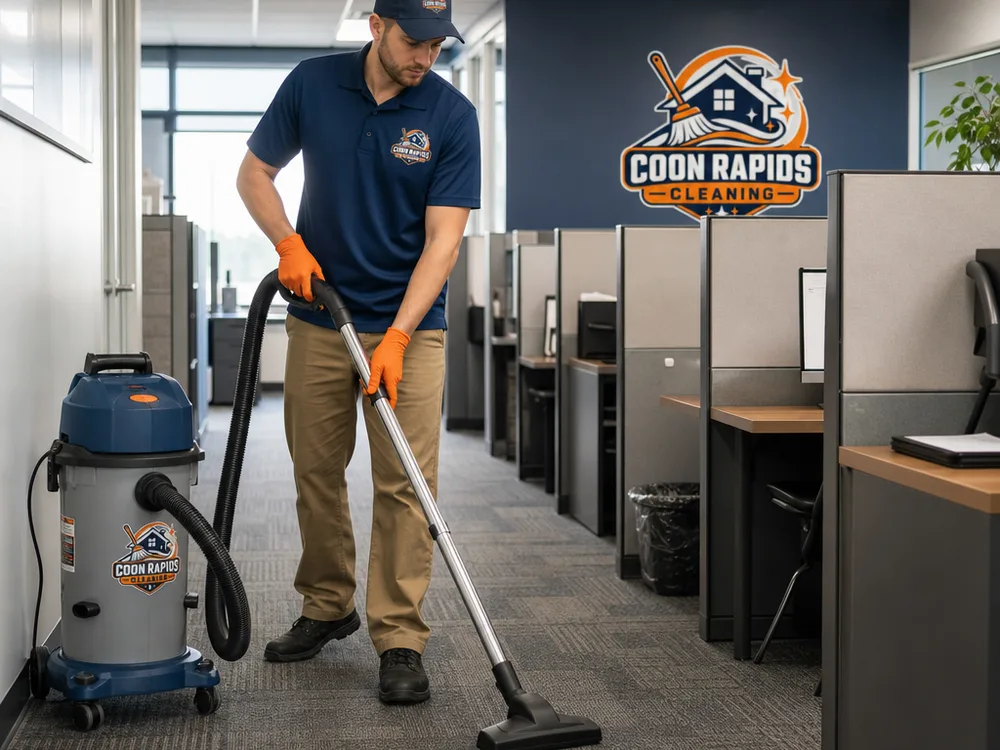
Reach
Down at child height
Schedule
Fitted to the school day
Shared surfaces
Handles, tables, and rails
A school or a childcare room collects its soil at a different height from an office. Table tops, chair backs, cubby shelves, low door handles, light switches at waist level, and the bottom half of every wall take the contact, and an adult eye line misses most of it.
The other constraint is the clock. Classrooms are occupied, the day runs to a bell or a nap schedule, and the deeper work has to find the gaps: after dismissal, during a break in the calendar, or on the weekend. Nothing gets done by interrupting a room full of children.
Being based on Northdale Blvd NW in Coon Rapids keeps a change to a scope or a schedule easy to arrange when a calendar shifts. Winter adds the usual Minnesota problem, with salt and slush tracked down every corridor from the first snow to the last thaw.
Scope on a school starts from the surfaces children actually touch, then covers the shared spaces carrying the whole building's traffic through the day.
Some things stay with your staff by design. Toys, manipulatives, nap mats, and anything your licensing or your own policy assigns to teaching staff are handled by them, and the scope says so rather than leaving a gap where both sides assume the other is covering it.
Minnesota winters push corridor and entry work up the priority list. Salt and slush arrive on hundreds of pairs of boots a day, and a floor that keeps that grit gets damaged as well as dirty, so matting and entry attention move to a tighter cycle in the cold months.
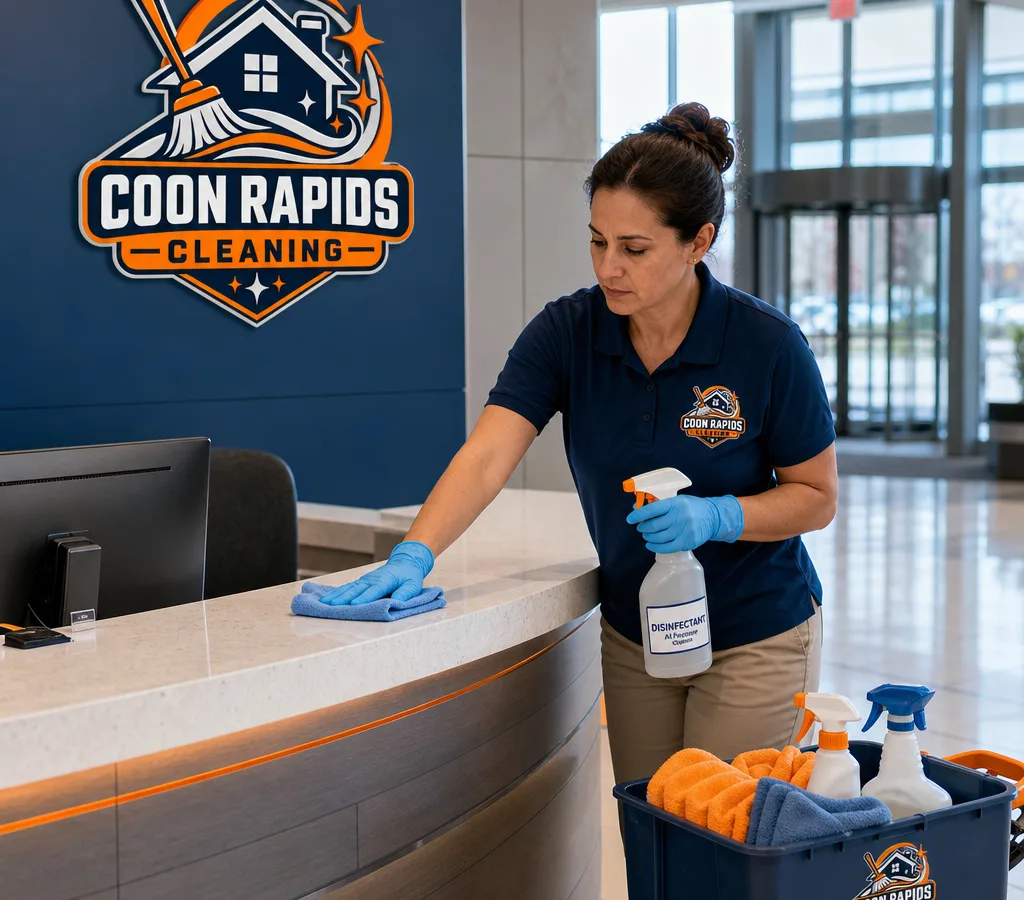
Two facts govern a school: the important surfaces sit low, and the timetable cannot move. Between them they decide the reach, the hours, the shared touchpoints, the division with teaching staff, and the products.
The crew cleans at the height the building is used. Table undersides, chair backs, cubby shelves, and the lower wall surfaces get attention, because that is where hands and sleeves make contact all day.
The work fits the calendar rather than asking it to move. Routine visits happen after dismissal, and the heavier projects go into breaks and summer when rooms are genuinely empty.
Handles, switches, rails, and fountain pushes are the surfaces a whole building shares. They are named in the scope and cleaned on a stated frequency instead of when someone notices.
Classroom materials, toys, and nap equipment stay with teaching staff under your own policy. We clean the room around them, and the written scope records which is which.
Disinfectants need their contact time to work, and a room gets it because the schedule allows for it. Where your policy requires particular products, we work to that as written.
Here the calendar comes first and everything else follows it: seeing the rooms, placing routine work after dismissal and heavier work in the breaks, recording the detail, and revisiting it as terms change.
Request a CallbackWe go through classrooms, restrooms, corridors, the cafeteria, and the activity spaces, and ask what your own custodial or teaching staff already covers each day.
Routine visits are set against dismissal times and after care hours, and the heavier work is placed into breaks and the summer when rooms can be emptied properly.
Tasks, heights, frequencies, and the products your policy requires are documented, along with the classroom materials that stay with teaching staff.
A calendar changes, rooms get reassigned, and enrollment moves. We check the scope against what the building actually needs rather than letting last year's plan run on.
Room count and restroom count drive more of this than total area, because the work is concentrated in classrooms and the restrooms serving them. A building with many small rooms takes longer than one with the same area in a few large spaces.
After that it is frequency, the hours available, and the floor types. Daily service during term with heavier project work in breaks is the usual shape, and the condition of the floors at the start decides whether a reset comes before the routine.
School work happens at child height and in the shared spaces: classroom tables and cubbies, corridors and entries, restrooms sized for children, and the cafeteria and activity rooms.

Term time, breaks, and summer each allow different work, and that calendar runs under most of what a school or a childcare manager asks.
After dismissal or after the last after care session, on a window set with you. Heavier work waits for a break in the calendar or the summer, when rooms can be emptied properly. Nothing routine happens while a room is occupied by children.
No, those stay with teaching staff under your own policy and licensing. The room around them is ours: tables, chair backs, shelving, cubby fronts, floors, and the touchpoints along the way. That split is recorded in the scope in plain language.
They get the same disinfection as any restroom, with attention to the fittings at child height and to the lower wall and floor areas around them. Supplies are refilled from your stock, and the frequency is usually higher than in an adult restroom.
Entry matting gets washed rather than shaken out, and corridor and entry floors move to a tighter frequency through winter. Grit that stays on a floor scratches the finish as well as looking bad, so the track-off zone takes priority in the cold months.
Yes, and that is usually when the heavier work belongs. Floors can be stripped and refinished, rooms emptied and reset, and carpet extracted properly when there is no schedule to work around. It goes in the plan rather than being quoted in a rush.
That is the aim, because a crew that knows the building makes fewer mistakes and needs less supervision. When somebody is away, their replacement works from the same written scope, so the areas that matter most do not change with who is on shift.
Tell us your dismissal times, your calendar, and what your own staff already covers, and we will build a scope that fits the day rather than interrupting it.
Request a quote
Send the details and we will come back with a written scope and a price.